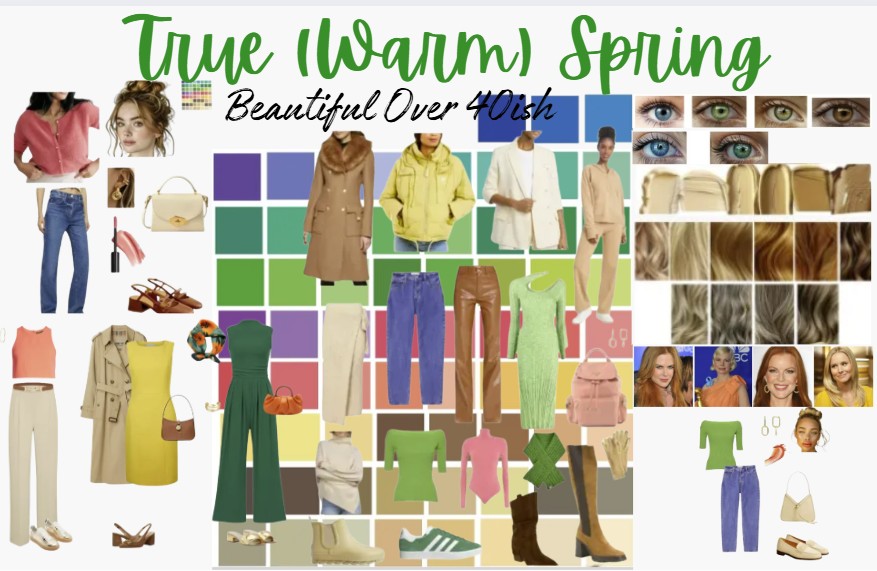
Ready to make getting dressed feel easy? Knowing you’re a True/Warm Spring means your vibrant colors do the heavy lifting. Skin looks brighter, eyes pop, and your closet starts to click. If you completed this step-by-step test, you’re already ahead: https://beautifulover40ish.com/seasonal-color-palette-step-by-step/.
This guide gives you clear answers fast. You’ll see quick checks to confirm your season, side-by-side comparisons with lookalike seasons, and a ready-to-use True Spring color palette with hex codes.
By the end, you’ll know what to buy, what to skip, and how to pair colors with confidence. Your clothes should support you, not confuse you. Let’s build some true/warm spring outfits that work every day.


What Is True/Warm Spring? Understand Your Season and Why It Matters
Finding your season is like getting a color filter that flatters you in every mirror. True Spring, sometimes called Warm Spring, is all about lively warmth, clear color, and a light to medium feel. When you wear your best shades, your skin looks smoother, your eyes brighten, and you need less makeup to look awake.
Seasonal color analysis groups people into 12 seasons using three ideas: undertone, depth, and clarity. True Spring sits in the warm and bright space, which explains why crisp, golden colors look natural on you, while cool or muted shades can feel dull. If you suspect you are a True/Warm Spring, the checks below will help you confirm it.

The 12 color seasons explained in plain English (plus a simple cheat sheet)
12-season quick guide:
- light spring: warm, light, and bright, best in sunny pastels and clear lights.
- True Spring: warm, medium value, high clarity, thrives in pure warm hues.
- bright spring: warm-neutral, high chroma, medium to high contrast, crisp brights.
- Light Summer: cool-neutral, light and soft, best in airy, cool tints.
- True Summer: cool, medium value, muted, shines in soft cool blends.
- Soft Summer: cool-neutral, soft and medium-dark, needs gentle grays.
- Soft Autumn: warm-neutral, muted and medium, earthy and hazy tones.
- true autumn: warm, rich and deep, best in golden, toasted shades.
- Dark Autumn: warm-neutral, deep and muted, spicy and shadowed hues.
- Dark Winter: cool-neutral, deep and bright, rich jewel depth with clarity.
- True Winter: cool, high contrast, icy brights and stark neutrals.
- Bright Winter: cool-neutral, very bright, cool clarity with neon-like pop.
Cheat sheet for quick scanning:
| Season | Temperature | Chroma | Light |
|---|---|---|---|
| Light Spring | Warm | Bright | Light |
| True Spring | Warm | Bright | Bright |
| Bright Spring | Neutral Warm | Very Bright | Light |
| Light Summer | Neutral Cool | Soft | Light |
| True Summer | Cool | Soft | Soft |
| Soft Summer | Neutral Cool | Muted | Soft |
| Soft Autumn | Neutral Warm | Muted | True |
| True Autumn | Warm | Muted | Dark |
| Dark Autumn | Neutral Warm | Muted | Dark |
| True Winter | Neutral Cool | Bright | True |
| Bright Winter | Cool | Very Bright | Bright |
| Dark Winter | Neutral Cool | Very Bright | Dark |
Every season blends three traits:
- Warmth: warm vs cool
- Value: light vs deep
- Chroma: clear vs soft
Think of it like three color dimensions. Warmth sets undertone, value sets how light or dark the colors go, and chroma sets how pure or gray the colors feel.
Then, each main season splits into three sub-seasons. True/Warm Spring sits at the center of the Spring family. It is the purest version of warm and bright, with light to medium value and medium contrast. If a color looks sunny, clean, and a little golden, it probably belongs here.
Key takeaway: True/Warm Spring lives in the warm and bright quadrant. You need warmth first, then clarity, with value staying light to medium.


True/Warm Spring traits: skin, hair, and eyes checklist
Use this quick checklist to see if your natural coloring aligns with True Spring. You do not need to match every line, but you should see a clear pattern.
- Skin: golden undertones or peachy with warm skin tone, often tans; may have freckles; can look clear and energized in warm light; warm undertones bring out the best glow.

Hair: warm blonde, strawberry blonde, golden blonde or copper hair highlights; warm brown; some natural shimmer in the sun.

Eyes: clear and bright; warm green, light hazel, warm blue, or light brown with golden flecks; often a crisp edge between iris and whites.


Fast mirror test:
- Gold jewelry looks lively and blends into your glow.
- Silver jewelry can look flat or gray, especially near the face.
If gold wins and warm, clear colors wake up your face and help you choose the right makeup shades, you are likely in the Spring family. If those colors also need to be bright rather than muted, True/Warm Spring is a strong match.
Colors to Drape

If you’d like to explore some drapings at home, here are some colors you might use to explore the True/Warm Spring Palette.
- Coral
- Salmon
- Peach
- Apricot
- Daffodil Yellow
- Buttermilk
- Spring Grass Green
- Turquoise
- Gold
Or you can choose some colors from the palette. Ideally what you are looking for are colors that support your natural features. We want to see natural-colored lips, even skin tone, and a natural contour to your face.
Quick color tests to verify True/Warm Spring
Set up these at-home tests in natural light. Stand near a window or step into open shade outdoors. Tie your hair back, skip heavy makeup, and hold color swatches near your face.
Try these pairs:
- Warm coral vs cool fuchsia
- Right swatch result: skin looks fresh and smooth, lips gain natural color, under eye shadows soften.
- Tomato red vs blue-red
- Right swatch result: eyes look brighter and more defined, teeth do not look dull, any redness in skin calms.
- Warm turquoise vs icy teal
- Right swatch result: face looks lit from within, not pale; no gray cast along the jawline.
What to watch for:
- Fresher skin with less blotchiness.
- Brighter eyes with clear whites.
- Smoother shadows around the nose and mouth.
Pro tip: snap a quick phone selfie in open shade for a reality check. Compare photos side by side. The right colors make you look rested and alert. The wrong ones add fatigue or a sallow tint.
True Spring Celebrities

- Cameron Diaz
- Blake Lively
- Judy Greer
- Chloe Sevigny
- Kristen Bell
- Cynthia Nixon
- Amy Adams
- Anna Camp
- Gillian Anderson
- Nicole Kidman
- Michelle Williams
- Marcia Cross
- Hayden Panettiere

True Autumn vs True/Warm Spring


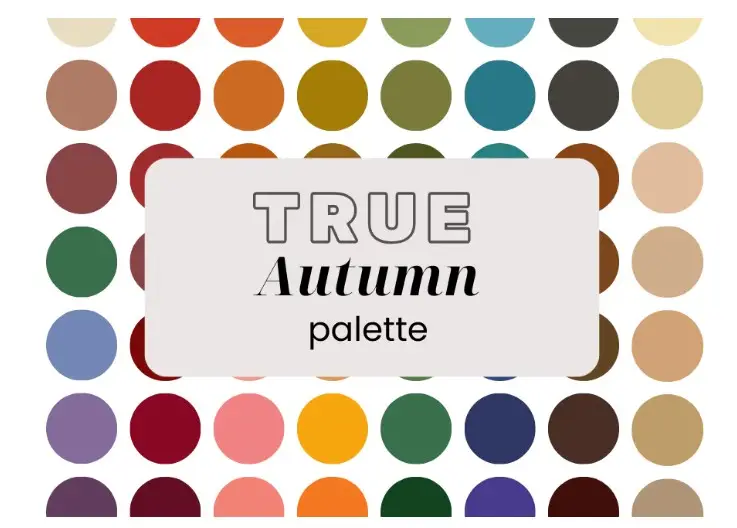
True/Warm Spring vs True Autumn

Bright Winter vs Bright Spring vs Light Summer: key differences at a glance
These three can be confusing because they share clarity or lightness. Here is how to spot them fast.
- Bright Winter: cool and very high contrast. Think icy, sharp, and bold.
- One-liner: Bright Winter handles stark black and white.
- Bright Spring: warm and bright with higher intensity than True Spring.
- One-liner: Bright Spring needs warm clear color at a stronger saturation.
- Light Summer: cool and light with softness.
- One-liner: Light Summer looks best in cool airy pastels.
Where True Spring fits:
- True Spring shares brightness with Bright Spring, but stays a bit lighter and warmer overall.
- Black and pure white often feel harsh on True Spring. Ivory, camel, warm navy, and honeyed neutrals look right.
- Your best accents include coral, daffodil, warm turquoise, and tomato red. They are clean, warm, and sunny, not icy or dusty.
If you look electric in black and white, test Bright Winter. If your best colors are bright but slightly cooler or higher contrast, test Bright Spring. If you look best in cool, whisper-light shades with a veil of softness, test Light Summer.
True/Warm Spring vs Warm Winter and Deep Autumn: Know the Difference
True/Warm Spring sits in a sweet spot of warm, clear color with light to medium depth. Two lookalike neighbors can muddy the waters: Warm Winter and Deep Autumn. Bright Winter also trips people up because it shares clarity but not temperature. Use the cues below to lock in your best season with confidence.
Here is a quick snapshot before we dive into telltale signs.
| Season | Temperature | Depth | Chroma | Contrast | Best White Near Face | Black Near Face |
|---|---|---|---|---|---|---|
| True Spring | Warm | Light-medium | Clear | Medium | Creamy ivory | Usually harsh |
| Bright Winter | Cool | Medium-deep | Very clear | High | Bright cool white | Energizing |
| Warm Winter | Neutral-cool | Medium-deep | Clear | High-crisp | Bright cool white | Works in accents |
| Deep Autumn | Warm | Medium-deep | Muted-rich | Medium | Cream or ecru | Works if softened |
True/Warm Spring vs Bright Winter
Both love clarity, but they part ways on temperature and contrast. Bright Winter is cool and thrives on icy brights and sharp edges. The True Spring color palette needs golden warmth and a slightly softer contrast to look alive.
- True black test: True black often overwhelms True Spring, draining warmth and sharpening lines. On Bright Winter, true black looks crisp, chic, and balanced.
- White test: Bright Winter can handle cool optic white. True Spring looks better in soft ivory or buttermilk.
- Lipstick test: A blue-red lip energizes Bright Winter. A tomato or poppy red lights up True Spring.
- Color feel: Bright Winter shines in cool neon brights and high-ink saturation. True Spring glows in warm, sunny brights with a hint of yellow.
| Color Test | Your Reaction | What It Suggests |
|---|---|---|
| True black near your face | Black jumps forward, your skin looks dull or hard, facial features disappear | Steer away from Bright Winter |
| Bright Winter cool brights (icy pink, cobalt) | Colors look louder than your face, you see the color before you see yourself | Likely not Bright Winter |
| Soft ivory near your face | Skin looks smoother and brighter, shadows soften, no gray cast | Points toward True Spring |
| Warm turquoise near your face | Eyes look clearer and lighter, whites of the eyes look clean, face looks fresh | Strong hint for True Spring |
| Cool, blue-tinted pastels | Make you look tired, washed out, or slightly sick | Not a cool Winter palette |
| Warm, yellow-based brights | Bring your features forward, add glow, no redness spike | Fits True Spring more than Bright Winter |
True/Warm Spring vs Deep Autumn telltale clues
Deep Autumn shares warmth with True/Warm Spring, but the feel is richer and more grounded. The palette leans deeper and more muted, which can look heavy on a light-leaning Spring, especially if you have a warm skin tone.
- Depth: True/Warm Spring shines in light to medium values. Deep Autumn prefers medium to deep.
- Clarity: True/Warm Spring needs clear, fresh color. Deep Autumn favors softened, earthy tones.
- Neutral check: Deep olive, burgundy, chocolate, and espresso flatter Deep Autumn. If these shades swallow you or add shadows to your face, you are likely not Deep Autumn.
- Face read: If your features look shadowed in deep tones and your under eyes seem darker, lean Spring, as these read better with your warm undertones. If earthy depth makes your eyes richer and skin smoother, Deep Autumn fits.
| Checkpoint | True/Warm Spring | Deep Autumn |
|---|---|---|
| Depth | Shines in light to medium values | Prefers medium to deep values |
| Clarity | Needs clear, fresh, high-clarity color | Favors softened, muted, earthy tones |
| Neutral test | Deep olive, burgundy, chocolate, espresso look heavy or harsh | Deep olive, burgundy, chocolate, espresso look rich and flattering |
| Face read | Deep tones add shadows, under eyes look darker, features sink | Earthy depth makes eyes richer, skin smoother, features more defined |
| Likely season | True/Warm Spring | Deep Autumn |
Quick swaps that reveal the truth:
- Try clear leaf green rather than forest. If leaf green looks brighter and more natural, True Spring wins.
- Try peach over rust. If rust makes your skin look flat, move to Spring.
True/Warm Spring vs Warm Winter telltale clues
Warm Winter is sometimes called Warm Bright Winter in some systems. The name suggests heat, but the palette still leans cool overall, with crisp contrast and a strong inky base, unlike sister palettes such as Bright Spring.
- Temperature: Warm Winter tolerates cooler brights mixed with a hint of warmth. True Spring needs golden warmth across the board.
- Contrast: Warm Winter handles dark-light contrast and sharp edges. True Spring prefers medium contrast and sunny clarity.
- White test: Bright cool white is fine for Warm Winter. Creamy ivory looks better on True Spring.
- Anchor colors: Warm Winter can use black, ink navy, and cool fuchsia as accents. True Spring looks best with warm navy, camel, and coral.
Try this simple pairing test:
| Test Area | True / Warm Spring | Deep Autumn |
|---|---|---|
| Depth | Shines in light to medium values; darker colors feel heavy | Prefers medium to deep values; too-light shades look weak |
| Clarity | Needs clear, bright, fresh color; muddiness dulls the skin | Favors softened, earthy tones; very clear colors look harsh |
| Neutrals | Deep olive, burgundy, chocolate, espresso often look too dark or draining | Deep olive, burgundy, chocolate, and espresso look rich and flattering |
| Neutral Check | If those deep neutrals swallow you or cast shadows, you’re likely not Deep Autumn | If those neutrals look balanced and smooth, Deep Autumn is likely |
| Turquoise Test | Warm turquoise with ivory keeps the skin bright and relaxed | Warm turquoise with ivory may look a bit light or clear |
| Cyan Test | Cyan with cool white makes the skin look gray or tense, which points to True Spring | Cyan with cool white can look too sharp but not always graying |
| Quick Verdict | Light to medium, clear, warm colors win, and cool combos drain you | Medium to deep, softened, earthy colors win, and deep neutrals flatter you |
If you look warm and muted, what that means
Sometimes warm colors feel right, but bright ones shout. If that is you, you might be in the Autumn family, not Spring.
- Soft Autumn: Warm, gentle, and muted. Best in dusted peaches, olive, sage, and soft terracotta.
- Warm Autumn: Toasty and richer. Best in pumpkin, rust, olive, and golden brown.
Use these quick tests to sort it out:
| Color Test Area | True Spring (Warm, Clear, Bright) | Autumn (Warm, Soft, Muted) |
|---|---|---|
| Peach vs Dusty Apricot | Warm, clear peach looks fresh, bright, and a bit juicy on you; your skin looks clearer and more alive | Dusty apricot softens lines, calms your features, and feels quietly flattering; peach may look too sharp or candy-bright |
| Skin Effect with Peach Tones | Clear peach keeps the face crisp and defined; your skin tolerates brightness well | Dusty apricot smooths texture and blends with your natural warmth; strong peach can sit on top of the skin |
| Clear Leaf Green vs Olive | Clear leaf green looks clean and vivid, like fresh grass in sun; your face stays in focus, not the color | Olive looks dull or heavy; it can add shadows or make you look tired or sallow |
| Skin Effect with Greens | Bright leaf green keeps your features sharp; your eyes may look lighter and more sparkly | Olive turns harmonious but not exciting; it can deepen your features yet steal light from your eyes |
| Finish Test with Spring Palette | True Spring colors look clean, bright, and sunlit on you; you can handle clear, high-energy color without looking overwhelmed | If you add a softened veil (slight gray or softness) over Spring colors and it helps, Spring is probably too intense for you |
| Finish Test with Autumn Palette | Spring brightness alone feels right; softening the color makes you look dull or tired | Soft, warm, slightly muted finishes flatter you most; they balance your features instead of washing them out |
| Likely Season Outcome | Warm peach with clarity, clear leaf green, and unfiltered Spring brightness all work; you likely sit in True Spring | Dusty apricot that smooths your skin, olive that brings your face into focus, and a softened finish that helps all point to Autumn |
Key takeaway:
| What you notice on your face | What it suggests | Seasonal direction to try |
|---|---|---|
| Warm, clear colors make you look fresh, awake, and alive | Warm and bright works | True Spring |
| Warm colors help, but very bright shades feel loud or “noisy” | Warm but softer works | Soft Autumn or Warm Autumn |
| You are unsure or stuck between options | Need a simple tie-breaker | Use the white, black, and lipstick tests; they rarely lie |
True/Warm Spring Color Palette That Flatters: Hex Codes, Neutrals, and Patterns


True Spring color palette works best when it is warm, clear, and light to medium in depth. Use sunny neutrals as your base, then add fresh accents that feel like new leaves and bright flowers. If your outfits look a little flat, your palette likely needs more golden warmth or cleaner color near your face.

Core warm neutrals: wardrobe essentials you can build on (and how to soften black)

Start with warm, friendly basics. These shades create a cohesive base that makes pairing color simple.
- Warm ivory: creamy and bright, your best “white”
- Camel: polished and versatile
- Light warm navy: clean and slightly green-leaning
- Golden tan: relaxed warm brown, not muddy
- Warm gray: taupe or greige, not steely
Smart ways to work them:
- Layer values: ivory tee, camel blazer, warm navy pants. It reads crisp without feeling stark.
- Mix smooth textures: fine knits, twill, silk, and soft leather in camel or warm brown keep the look light.
Need to wear black for a uniform or event? Make it work for you:
- Add a warm scarf in ivory, coral, or teal.
- Choose yellow gold jewelry that reflects warmth.
- Show skin at the neckline or wrists to break up the block of black.
Quick swap that flatters almost everyone in this season:
- Replace black with deep teal or warm navy for instant harmony. Deep teal is rich without heaviness, and warm navy behaves like black but stays friendly to your undertone.
Full palette with hex codes, plus a Canva palette
Use this mini True Spring color palette to anchor outfits and build mood boards. These hex codes are tested for the True Spring color palette, warm, clear, and sunny color. Copy them into Canva to create a Brand Kit or a custom color palette, then build lookbooks and shopping boards with confidence.
| Color Name | Hex Code | Description |
|---|---|---|
| Warm Ivory | #FFF1E0 | Best light neutral |
| Camel | #C19A6B | Polished base for workwear |
| Warm Navy | #2C4A6E | Clean navy with subtle warmth |
| Tomato Red | #FF6347 | Energizing, not blue-based |
| Coral | #FF6F61 | Lively and flattering |
| Peach | #FFCBA4 | Soft, fresh blush tone |
| Apricot | #FBCEB1 | Gentle warmth for tops |
| Warm Turquoise | #25C3B0 | Power color for True Spring |
| Leaf Green | #54B948 | Clear, sunny green |
| Sunny Yellow | #FFD84D | Daffodil, not neon or pastel |
How to use it in Canva:
- Copy each hex code into Canva’s color picker.
- Save as a palette in your Brand Kit.
- Create a mood board with 3 neutrals and 2 to 3 accents.
- Test outfit combos before you buy, like warm navy, ivory, and coral, or camel, leaf green, and apricot.
Example combo to try this week:
| Item | Color Name | Hex Code | Description |
|---|---|---|---|
| Pants | Warm navy | #2C4A6E | Deep blue that feels rich and soft, anchors the whole outfit |
| Blouse | Warm ivory | #FFF1E0 | Creamy off-white that brightens the face and softens the navy |
| Cardigan | Coral | #FF6F61 | Lively warm coral that adds energy and a friendly pop of color |
| Earrings | Yellow gold | N/A | Classic yellow gold hoops that tie in with the warm tones and add polish |
Accent colors that pop without shouting, plus metal finishes
Accents should feel bright and joyful, like vibrant colors, not harsh. Keep them clear and warm so your skin looks smooth and awake.
Great accents:
| Color | Description |
|---|---|
| Clear coral | Adds a soft glow without heavy contrast |
| Poppy red | Lively and cheerful, a warm red that isn’t blue-based |
| Coral pink | Peachy pink that looks youthful and soft |
| Lime/leaf green | Fresh and crisp, ideal for tees or bags |
| Warm turquoise | Standout shade that looks great worn near the face |
Metal finishes that flatter:
| Finish | Key strength | On skin | In accessories | Everyday jewelry |
|---|---|---|---|---|
| Yellow gold | Best overall match | Enhances natural warmth | Polished look in watch cases and clasps | Best for reflecting your warmth day-to-day |
| Warm rose gold | Soft and pretty visual effect | Soft and pretty on skin | Romantic accent in buckles and details | Lovely for delicate, feminine pieces |
| Light bronze | Understated, elegant presence | Subtle, muted warmth | Elegant in hardware and belts | Works well for occasional, statement accessories |
What to skip:

– Cool silver near the face can dull warmth. If you love it, mix with yellow gold in layered necklaces or two-tone earrings so the overall read stays warm.
Styling idea:
| Item | Color / Finish | Style Notes |
|---|---|---|
| Top | Coral | Brings clear, happy color near your face, keeps the look bright and fresh. |
| Jeans | Warm ivory | Soft contrast with coral, feels light but not stark, easy to rewear. |
| Belt | Leaf green | Adds a sharp, natural pop, ties the outfit together without stealing focus. |
| Earrings | Yellow gold studs | Simple shine near the face, keeps things polished but still relaxed. |
| Sandals | Camel | Grounds all the color, looks refined, and works with almost any outfit. |
| Overall effect | Balanced, bright | Cheerful but not loud, repeats well with other tops, tees, and blouses. |
If you would like to read a more detailed blog on True (Warm) Spring, please refer to: Wear Lively Warm Tones: True (Warm) Spring Capsule Made Simple.

Wear Lively Warm Tones: True (Warm) Spring Capsule Made Simple
Wear Jewel Tones: Cool (True) Winter Capsule Made Simple
Wear Cool & Bright Colors: Clear (Bright) Winter Made Simple
Wear Rich Tones: Deep Dark Winter Capsule Made Simple
Warm and Muted Style, Your Soft Autumn Capsule Made Easy
Wear Warm, Rich & Toasty: Warm/True Autumn Capsule Made Simple
Wear Warm, Rich Tones: Deep Autumn Capsule Made Simple
Find Your Seasonal Palette at Home: Simple Steps & Results
Discover more from Beautiful over 40ish
Subscribe to get the latest posts sent to your email.