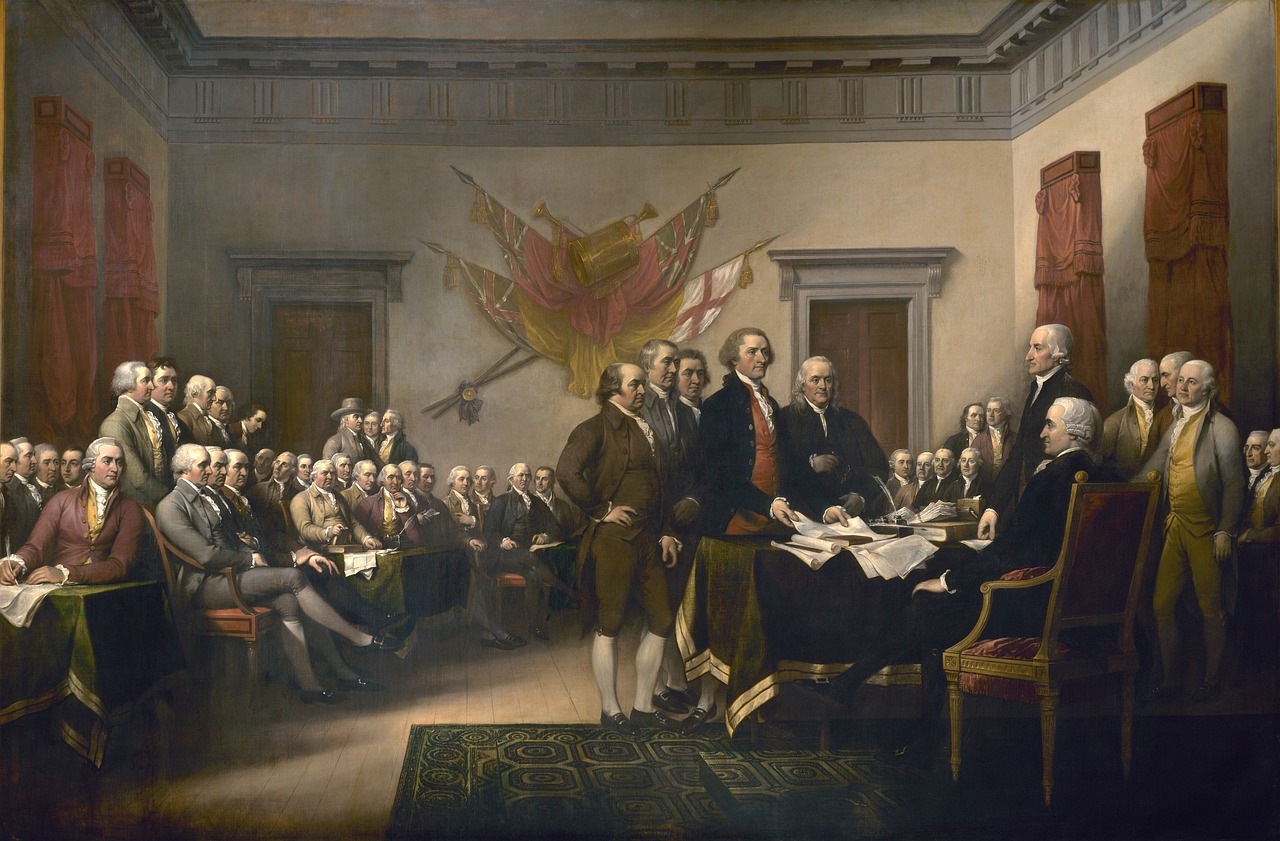
Imagine the crackle of tension in the air, feather quills poised above parchment, and a crowded Philadelphia room pulsing with anticipation as the Declaration of Independence was signed on July 4, 1776. The summer heat outside barely competes with the fever of revolution inside. The stakes could not be higher—one bold signature, and everything shifts. For the signers, this moment is thunderous, teetering between risk and hope.
This isn’t just textbook history. The urgency, the weight, the risk, the vision—it’s all very real. Those gathered aren’t legends yet. They’re fashioning a new identity, challenging centuries of royal tradition, stepping onto a stage that history won’t forget. Today, reminders of that scene speak to anyone who has ever wanted change. It’s more relevant than ever—an invitation to remember what standing up, and signing your name, can really mean.

The Historical Backdrop: America in July 1776
Before the Declaration, Philadelphia was buzzing with rumors, whispered plans, and the snap of brass buckles on cobbled streets. The city pulsed with anxiety, wit, and rebellion. July 1776 didn’t just see history—it felt like the world had been turned inside out for everyone, from the well-heeled delegates in their powdered wigs to the shopkeepers trading goods by candlelight. This is your invitation to peek behind the curtain: what was life really like, what did people wear and eat, who were the voices in the room, and how did the country’s mood turn from loyal to revolutionary?
For History Buffs and Academic Exploration
To feed a fascination with the Declaration of Independence, there’s no shortage of ways to get closer to the bold signatures, gleaming inkpots, and crowded chambers.
Must-read books:
- Signing Their Lives Away by Denise Kiernan and Joseph D’Agnese brings each signer’s story to life.
- American Scripture by Pauline Maier breaks down the document’s lasting impact.
- For group study, 1776 by David McCullough captures the mood and drama of that fateful year.
Documentaries and visual media:
- Liberty! The American Revolution (PBS) puts vivid images and voices to the chaos.
- HBO’s John Adams miniseries lets you glimpse the signing through the eyes of its most passionate advocates.
For deeper research:
- The National Archives and Library of Congress each host digitized academic articles covering original drafts and scholarly debates on meaning.
- JSTOR and Project MUSE feature university-level discussions for serious historians.
Special tours and experiences:
- Visit Independence Hall in Philadelphia, where guides mix facts with folklore, stepping right into those candle-lit debates.
- Historical walking tours in Williamsburg or Boston let you trace the footsteps of Patriots.
Educator’s toolkit:
- Teachers will love resources from the Gilder Lehrman Institute, with lesson plans and primary sources.
- Many museums also offer virtual tours and digital collections, making history fresh in any classroom.
Colonial Life and Daily Realities

Photo by C. Spencer van Gulick
Think of colonial America as a mix of grit, tradition, and creativity, all stitched together in careful routine.
A snapshot of daily life:
- Mornings started before sunrise, chores first—hauling water, tending fire, and feeding livestock.
- Meals revolved around corn, pork, seasonal veggies, stews, and hearty breads. Spices were a luxury. Cider and beer replaced water, which was often unsafe.
- Clothes went for function over flair. Men donned knee breeches, linen shirts, and tri-cornered hats. Women wore bodices, full skirts, and crisp aprons. In Philadelphia, stylish coats and silks made sporadic cameos, hinting at British influence.
- Social life meant markets, church, the town green, and the tavern. Gossip met politics—sometimes in a single breath.
- Family structure was practical and tight. Multi-generational households kept everyone busy.
- Jobs ran the gamut—blacksmiths and shoemakers, printers and millers, with farming the backbone for most. Apprenticeship was the path for young men to learn a trade.
- Medicine still felt medieval. Folk remedies, herbal concoctions, and bloodletting were common. Infection was a constant threat.
- Getting around required patience. Most walked. Horses were prized, carriages for the wealthy, boats for rivers.
- Entertainment was homegrown. Fiddles at barn dances, card games by firelight, and holiday celebrations kept spirits up.
The Continental Congress Gathers
Picture a steamy July in a city flush with nervous chatter. Inside the Pennsylvania State House, now Independence Hall, delegates from the thirteen colonies fill the hardwood benches. These men—some wealthy planters, others bookish lawyers or merchants—have come far. They sit in woolen coats, sweat trickling as doors shut out curious ears. Urgency hangs thick, broken only by the shuffling of papers, heated debate, and the occasional flash of humor. John Adams, Thomas Jefferson, Benjamin Franklin—they each make their mark in ways big and small. Every vote is another heartbeat pushing the country closer to breakaway.

Revolution Experience & Historical Imagination July 4, 1776
Set your mind to July 4, 1776. Join the delegates pressing close to wooden desks, listening as Jefferson’s words cut the air. The ink is fresh, the room alive with tension and hope. The parchment, large and daunting, waits for signatures that could change fates. If you were there, would your hand tremble or would excitement take over? Imagine the echo of horses in cobblestone alleys, soldiers worried in the streets, children peering into candle-lit windows hoping to catch a rumor. The air holds the weight of decision. You can almost feel the pulse that made this day possible.
Political and Social Context
The road to July 1776 wasn’t smooth. The colonies had bristled under British taxes—think Stamp Act, Tea Act, and the muscle-flex of the Quartering Act. Angry protests, boycotts, and midnight pamphlets marked the years before independence. In every town, debates about loyalty or rebellion grew louder.
Life under Britain’s rules:
- Colonials paid taxes for goods they didn’t choose, from tea to paper.
- British troops watched city streets, sometimes quartered in homes without invite.
The big risks: Putting your name on that parchment was an act of defiance—punishable by death. Families split over the question: remain loyal to the Crown or join the Patriots? Some neighbors avoided eye contact; others engaged in fiery debates at market stalls or church socials.
Mood in Philadelphia: The city felt both festive and fearful. Celebration crackled in taverns and alleys, but suspicion stalked in every shadow. For every cheer, there was a whispered warning of retribution if the British won.
Public Sentiment and Revolutionary Spirit
Patriotism didn’t sweep the colonies overnight. Some celebrated the cry for liberty, bonfires blazing late into the night. Loyalists—still faithful to King George—whispered their worries, kept close circles, and sometimes packed up for safer ground. But for many, something electric was in the air. News from the Continental Congress was devoured at taprooms and print shops. Local militias drilled in the fields, itching for a fight. Independence felt risky, even reckless, but for those who believed in the cause, it also felt like destiny was close enough to touch.

Founding Fathers and Their Stories
The signing of the Declaration wasn’t a simple signature party. It pulsed with raw fear, whispered doubts, and the crackle of new friendships heated by risk. While textbooks freeze the Founders into stone, their diaries and letters invite us closer—right into the fevered heartbeat of 1776. Step inside the Pennsylvania State House and feel every candle flicker, each stolen smile or sidelong glance. This was history written by flesh-and-blood men, their words echoing across centuries.
Anecdotes, Quotes, and Personal Accounts
Stories from July 4th read like private memoirs, full of suspense, nerves, and bold pronouncements. Many signers later revealed what it felt like to stake everything on ink.

Photo by Tara Winstead
Famous quotes spark with clarity:
- “We must all hang together, or assuredly we shall all hang separately.” —Benjamin Franklin, never one for mincing words, broke the tension with this razor-sharp remark.
- John Adams, writing to his wife Abigail on July 3, forecasted, “The Second Day of July 1776, will be the most memorable Epocha, in the History of America.” He guessed the date wrong, but his sense of gravity was spot on.
Signers’ personal letters crack open the moment:
- Jefferson’s correspondence reveals a mix of relief and exhaustion. He described sweating over edits, rewording ideals, and defending what he called the “spirit of 1776.”
- Adams’ letters often pulse with urgency, reminding Abigail (and himself) that freedom had no guarantee.
Eyewitness accounts from July 4th glitter with drama:
- Delegate Charles Carroll described the suspense: as each man took the quill, you could “hear a feather drop.”
- The ringing of the Liberty Bell later that day (though its exact timing is debated) signaled to the city: history, at last, had changed course.
Diaries from 1776 round out the story:
- William Whipple, a humble merchant, scribbled about staring down the king’s wrath, pen in hand, determined to “risk property and life” if freedom demanded it.
Stories like these don’t just fill out the margins—they bring the Founders off the pedestal and into the crowded, nervous room.
Founding Fathers as Real People
Behind every wig and waistcoat was a man with worries, quirks, and dreams.
Benjamin Franklin played more than the role of seasoned diplomat; he kept moods lifted with wit, defused tempers, and chose humor over hostility. Picture him cracking a joke just as debate grew sharp, or calming nerves with a story from London or Paris.
Thomas Jefferson bore the weight of authorship. Days before the signing, he felt the burn of edits, anxious that his words might be too bold or not bold enough. Locked away on sweltering nights, he churned out drafts, fighting for a vision of equality that nobody had tried before.
John Adams didn’t crave the spotlight, but he relished a good argument. To Adams, independence was urgent—he couldn’t sit still. He lobbied by candlelight and in crowded corridors, winning over doubters with sheer force of will.
Conflicts were personal, too:
- Adams and Jefferson argued over every comma and clause.
- Some signers viewed Franklin’s easy laughter as showing off, while others found it a relief from the heated air.
Friendships grew over late-night talks and shared meals, but disagreements sometimes pulled old friends apart. Signing the document put family fortunes, livelihoods, and even lives at risk.
Imagine a hushed conversation or a whispered pep talk between colleagues weighing the cost of treason. These weren’t shadowy legends—they were men grappling with stakes so high it’s hard to imagine.

Key Figures: The Founding Fathers
The roster reads like a classic guest list, but each attendee brought something unique to the table.
- Thomas Jefferson (Virginia): Principal author, young, and idealistic. His pen shaped the philosophy of a new nation.
- John Adams (Massachusetts): Vocal advocate, tireless organizer, and fierce in debate.
- Benjamin Franklin (Pennsylvania): Wise, witty, and quietly strategic, he ensured consensus won over chaos.
- Roger Sherman (Connecticut): Practical, understated, but ever-steady, he helped keep peace between strong personalities.
- Robert R. Livingston (New York): Involved in drafting, though absent at the signing, he helped steer early compromise.
- Charles Carroll (Maryland): The only Catholic signer, adding religious diversity to the company.
- Richard Henry Lee (Virginia): His bold resolution in June pushed the Congress toward independence.
Each signer knew the risk of rebellion. Most lost family or property, some never made it home again. But their signatures stitched a patchwork of personalities into a single story that still shapes American identity. Their choices rippled through time—proof that standing for what you believe in always leaves a mark.
Inside Independence Hall: The Day of the Signing
Step into the Pennsylvania State House on a sizzling July day in 1776. Independence Hall wasn’t just a building—it was the pressure cooker where the old world ended and something bold began. Here, a simple wooden chamber transformed into the backdrop for an act as magnetic as any moment in fashion history. No velvet ropes, no spotlights, just heavy air, frantic hearts, and the scratch of quills ready to alter everything you thought you knew. So what was it really like in that timeless, sweat-soaked room?
The Atmosphere in the Chamber
The inside of Independence Hall on signing day buzzed with energy even before ink stained the parchment. The long, rectangular room was framed by tall sash windows cracked slightly for air, sunlight slanting across polished wood and planed boards. The furniture felt solid and British but the energy was anything but polite.
Men packed shoulder to shoulder in out-of-season suits, wool clinging to damp skin. The heat pressed down—a blanket nobody could escape. Some wiped their brows, others fidgeted or clutched papers as if to steady their nerves. The tick of a mantel clock echoed as delegates took their places, creating a kind of unscripted drumroll.
Voices dropped to a hush. Under every powdered wig, a calculating gaze. This was a meeting but also a stage. Courteous greetings, clipped comments, a few tense laughs—everyone knew history was circling the room, pacing, impatient.

Iconic Moments and Emotions
Every good story craves its showstoppers, and the day of the signing packed plenty. Think of a runway before the flashbulbs go off: Electric. Charged. Unforgiving.
- The first signature set the tone. When John Hancock wrote his bold, stylized name, you could practically sense a ripple through the crowd. Hancock made a statement—oversized, dramatic, impossible to ignore.
- Each signer hesitated, just for a beat. The stakes hovered in the air. Some hands quivered. Eyes darted to the door, wondering if British soldiers might burst in.
- Benjamin Franklin uttered a quick, sharp line—part joke, part warning: “We must all hang together…” The laughter came nervous, stretched thin, but it broke the silence.
- Some men stole quick glances around, checking who else was committed. Each new signature felt like another domino falling.
Emotion swelled—equal parts dread and adrenaline. You could almost taste it: the fear that came with risking lives and the thrill of declaring something for the ages. By the end, pride filled whatever space anxiety left behind.
Related Events and Locations
To get the full texture of the day, pan the camera out from Independence Hall.
- The Continental Congress in session: All summer, delegates argued in the same building, sometimes sweating through late nights of debate. Decisions big and small sparked fireworks long before the fireworks.
- Philadelphia’s starring role: The city wasn’t just a backdrop. It was the cradle of ideas, colliding loyalties, and the stomping ground for spies and visionaries. Locals traded rumors in packed market squares while, just blocks away, the future was inked.
- Famous documents: Beyond the Declaration, Independence Hall also hosted the signing of the U.S. Constitution and the Articles of Confederation. It’s a paper trail of rebellion.
- Secret meetings and midnight debates: Taverns like the City Tavern became headquarter for plotting and strategizing away from prying loyalist ears. Sometimes, the real decisions simmered over mugs of ale spilled on wooden tables.
- Key locations: The Liberty Bell hung next door (its iconic crack came later), but it signaled freedom’s call. The city’s cobbled streets bustled with soldiers, merchants, and worried citizens, all tuned into the fever pitch.
- Events leading up to July 4: Streets buzzed with pamphlets, Loyalist whispers, and armed militia drills. Just days before, the Congress had voted for independence—signing made it real.

Photo by RDNE Stock project
Search Intent Variations
A swirl of questions lands at your feet when thinking about this day, and every angle uncovers more texture.
What did it feel like to sign the Declaration?
It felt like plunging into cold water, sharp and shocking. For many, it was the scariest rush you could imagine—followed by a flood of pride.
Firsthand stories from the Founders:
Letters show signers jittery yet stubborn. John Adams wrote Abigail that he was “well aware of the toil and blood” likely ahead. Jefferson recorded sleepless nights.
Summary of daily life in 1776:
Most lived in cramped quarters, with limited comforts. They trusted word-of-mouth over written news. Even in a city, life pressed close and felt hand-me-down.
Details about the signing moment:
The room grew silent. A single table, heavy wooden chairs. Parchment spread out, quills dipped. Each man stepped up, signed, then blinked as if to shake off the gravity.
Motivations of the Founding Fathers:
They were drawn by ideals—freedom, equality, a voice for the people. Some wanted tax relief, others future fame, but all risked everything for a new future.
Then versus now:
The U.S. in 1776 was scrappy, raw, and run on uncertainty. There were no guarantees, only hope and grit. Today, we see the results but forget the fear of starting from scratch.
Imagine witnessing it:
You stand by the door, watch the sweat drip, hear the paper rustle. The hush before a new era crackles around you. It’s equal parts party, protest, and private reckoning.

Sensory Details and Atmosphere
What did your senses record in Independence Hall that day? Details flood in, layer by layer.
- Sounds: Voices drifted—soft debate, the scratch of quills, boots scraping on pine boards. Street noise filtered through open panes: a cart rumbling, distant bells, maybe faint shouts.
- Sights: Sunbeams glinted off brass buckles, powdered wigs wilting in the heat. Coats were rumpled, collars loosened. The parchment gleamed on the table, daring each hand.
- Smells: A heady mix of sweat, ink, oiled wood, and the faint sourness of bodies packed together. Baked bread and street smoke drifted through open windows.
- The heat: July in Philadelphia hit hard—humid, relentless. Jackets stuck to spines. Handkerchiefs mopped brows. Even stone walls radiated warmth.
- Emotions in the room: The air pulsed with nerves—uncertain, excited, hopeful, terrified. Every signature released a fresh breath, a shared sense that the world just tilted.
- Fear of British retaliation: Not a phantom. Every signer knew what risk clung to each drop of ink. Kept glances trailed the doors, waiting for the sound of boots or the jangle of weapons.
- Pride and hope: As the signatures multiplied, gloom thinned. This was style as substance—standing up, staking everything, and knowing you might just change the world.
Your senses, if you were lucky enough to be in that humid historic chamber, would have recycled the same urgent message over and over: This is history, right now. Take a breath—it may never happen again.
Documents and Records
Some moments cry out for preservation. At the signing of the Declaration of Independence, every stroke of the pen became more than history—it was style, substance, and raw personal risk. Paper seems ordinary now, but on July 4, 1776, parchment was revolutionary runway material. The Founders weren’t just making statements with words, they were shaping identity on a single sheet. Real documents, real ink, and real signatures: these set the tone for everything that would follow.
The Declaration as an Object of Power

Photo by Pixabay
Not just any paper would do. The Declaration was written on heavy parchment, smoothed and sized to last for centuries.
Details matter:
- Ink was iron gall, favored for its bold, bluish-black look and its rockstar longevity.
- Quill pens—yes, real feathers—brought a tactile drama. Each curve in the script told you who had a steady hand, and who had sweaty palms.
- The final document radiated authority with a handcrafted style: sweeping capitals, measured spacing, and flourishes underscoring key points.
The look of the document mirrored the mood: fierce, stylish, and ready to be seen by the world.
Signing as a Statement
Fashion is all about statement pieces—and in 1776, the signature was as bold as it gets. John Hancock’s oversized autograph was more than ego. It was the original go big or go home moment, meant to catch both Parliament’s and the public’s eyes. Each signature below his told a slightly different story:
- Confident loops from the outspoken (Adams, Franklin).
- Crisp, careful marks from those feeling the weight of history.
- Smaller, almost shy names from those who knew the danger but signed anyway.
To witness the signing? Imagine a room where each name was a badge, a bet, and a broadcast of identity.
Beyond the Declaration: Other Key Documents
The action didn’t stop with one headline-worthy declaration. The Founders churned out a full closet of must-read documents that kept the revolution stylish and organized:
- Journals of Congress: Minutes, votes, and secret debates. Every decision, hemmed and highlighted for posterity.
- Drafts and edits: The Declaration had multiple drafts, each one revised and debated. Edits mattered, as if word choice were the next-season trend to get exactly right.
- Broadsides and pamphlets: Printed and pinned up across the colonies, these spread the news faster than whispers in a powder room. Suddenly, everyone in town could read Jefferson’s words—hot off the press.
Preserving the Look: How the Documents Survived
It’s not just the act of signing that stuns, but how these fragile artifacts made it to today’s spotlight.
- The original Declaration endured sunshine, folding, even near-disintegration before ending up under bulletproof glass at the National Archives.
- Copies were sent to towns in all thirteen colonies, making the message unmissable.
Even faded, those letters still draw crowds. The look, feel, and even the scent of old ink and parchment convince you: some styles really are forever.
What These Papers Mean Today
The Declaration isn’t just a relic; it’s a touchstone, the piece everyone wants in their collection. Modern Americans look at that looping script and see not just names, but the original signatures of rebellion and hope.
From fashion labels that riff on “We the People” to stylized recreations in school classrooms, the paper trail of 1776 shapes American identity to this day. The documents remind us that true style is about standing for something—and sometimes, all it takes is the courage to sign your name.
The Impact and Immediate Aftermath of the Declaration
The ink was barely dry when the world shifted. The signing of the Declaration didn’t wrap up the story in Independence Hall—it sent shockwaves, set new rules, and changed dinner arguments everywhere from Savannah to London. This wasn’t just high drama for the history books. The Declaration planted roots that still anchor our daily lives, rewrote the codes of power, and left a trail that other nations sprinted to follow. The aftershocks flew through city streets, echoed across the Atlantic, and settled deep in the hearts of people who suddenly saw themselves as something new—Americans.
Impact and Legacy
What happened next? The Declaration reshaped everything. For Americans, it snapped open a new identity almost overnight. Farmers, merchants, and ministers swapped “subject” for “citizen.” Every child born after July 4, 1776, entered a world where freedom was suddenly on-trend, not just a whispered wish.
Key impacts:
- Global influence: France, Haiti, and Mexico drew inspiration from the Declaration. Its style—clear, bold, not hiding in legal jargon—became the look international rebels wanted.
- Daily change: Neighborhoods divided as Loyalists packed up and left. Town squares hosted raucous readings, bonfires, and church bells that had never rung so loud.
- In the long run: The Declaration outgrew its moment. Its messages about fairness, equality, and rights became the national stylebook—even if the first edition left many out (think: women, enslaved people).
- First regrets: Not every signer slept easy. Some missed warning signs about future division—slavery, regional fights, even plain old political bickering. Adams and Jefferson later traded notes about what they might have trimmed, fixed, or worn more lightly if they’d known how big the moment would get.
The Founders’ signatures weren’t just trendy—they set a frame America still lives inside.
How News Traveled Through the Colonies
No Instagram, no push alerts—news moved on legs, horses, hope, and hot-off-the-press pamphlets. Getting the news out felt like a social movement by mail.
How did word spread?
- Town criers and bell ringers announced the news in main squares. Picture brass bells, loud voices, and a crowd pressing close.
- Broadsides (big printed posters) hung on tavern doors and church posts, hot off colonial presses, spreading Jefferson’s words one block at a time.
- Riders on horseback tore down muddy roads from Boston to Charleston, letters stuffed into saddlebags.
- Letters and gossip traveled from market stalls to backyard fences. Women at wells, men in workshops—everyone passed the news, sometimes changing it just a little each time.
Not everyone heard the Declaration at once, but when the news finally landed, it always drew a crowd.
Emotional and Personal Impact
Imagine hearing for the first time: the colonies are really, truly, free. Goosebumps chase up your arm. Lightning in your veins. You see risk and hope doing a dance in the square.
- Courage wasn’t just for the signers. Shopkeepers, students, and soldiers faced real danger if they backed the rebels. Courage meant acting even when fear stuck in your throat.
- Pride in American grit. No longer just “colonials”—Americans owned that name, sewed stars onto banners, and dared to dream bigger.
- Fear and bravery. Every signature could be a death sentence, but they signed anyway. That’s the style of real bravery—bold, loud, impossible to miss.
- If you’d been in Independence Hall, you’d maybe feel the room spin, your knees glued to the creaky floor, heart in your mouth as each name filled the parchment.
This was a day when history wasn’t just made, it was felt in every handshake and shiver.
Reactions in America and Abroad
News didn’t melt old loyalties instantly. The new America was thrilling but divided.
In America:
- Patriots? Dancing in the streets. Parades, toasts at taverns, even the mob toppling the king’s statue in New York.
- Loyalists? Packing bags, whispering doubts, taking slow, careful steps toward Canada or the Caribbean.
- Indifferent folks? Just trying to get on with their market trips and chores, hoping the change wouldn’t upend every comfort.
Across the ocean:
- In London, shock turned to fury. The British elite dismissed the Declaration as lawless noise, but secretly, many worried—could others in the empire get ideas?
- In Paris, eyes watched with envy and delight. The French saw in the Declaration a script for their own revolution to come.
- Other empires took note. The style of confidence, the call for rights—everyone wanted a piece.
Revolutions are contagious; this one was especially fierce.
Reflection and Personal Connection
Let’s turn the lens on you: imagine sitting face to face with these signers under the flicker of candlelight. What would you ask? Maybe you want to know about regret, pride, or the taste of fear.
What modern readers can take away:
- Ask hard questions. What kept them going? Fear of failure or hope for success?
- Draw inspiration. Every time you stand up for what’s right—or risk sticking out in a crowd—you channel their spirit.
- Write your own story. Independence isn’t stuck in 1776. Its energy powers every act of courage and kindness you make today.
- Stay connected. Read their stories and letters, visit Independence Hall, or pause at the nearest July 4th parade—see how the story lives on.
Freedom means pride, but also big responsibility. The Founders felt that weight, and so can you.
Risks and Sacrifices Taken by the Signers
Every name at the bottom of the Declaration marked a possible end—of safety, comfort, or even life.
- Loss of family and fortune: Many signers watched their homes burn, their businesses crumble. Some families scattered, some never reunited.
- Imprisonment and death: Capture by British forces could mean prison without trial, exile, or worse.
- Social exile: Friends turned enemies. Old networks cracked wide open.
- Permanent risk: Long after 1776, many signers looked over their shoulders, waiting for the knock on the door that might bring ruin.
They didn’t sign for the glamour. They signed knowing that true style might cost everything—yet did it anyway. That bold ink stands out not for beauty but for backbone.
Patriotic Food and Drink Ideas to Celebrate Independence Day
Food always brings people together, and Independence Day is the perfect stage for a little culinary style. From heritage-heavy dishes that nod to the flavors of 1776 to those eye-popping red, white, and blue desserts (looking at you, berry trifle), there is something about celebratory food that just sets the mood. Whether your gathering feels like a garden party or a family picnic, bringing past and present together with themed treats and signature drinks makes the moment unforgettable—and extra Instagrammable.

Colonial-Era Recipes Reimagined
There’s charisma in heritage recipes—think hearty and unfussy—but bringing them into the modern kitchen is all about the remix. Colonial cooks leaned on simple tools, garden-fresh produce, and whatever was in season. Today, you can elevate those flavors while keeping the spirit alive.
- Cornbread and Johnnycakes: The everyday version of bread in the 1700s. Modern takes use fresh sweet corn and a splash of buttermilk for a softer crumb and gold-on-gold color—you can even bake them mini-style for a handheld party snack.
- Chicken pot pie and root veggie stew: Classic comfort, always a hit. Load up a skillet with chicken, carrots, onions, and a heap of herbs for a dish that tastes like home and history in one.
- Mulled cider or shrub: Colonial hosts served up drinks sweetened with honey and tangy apple cider vinegar. Add a few muddled berries for a tart, fizzy pop and serve over ice for a cool-down worthy of July heat.
The best part? No one expects powdered wigs, just big flavors and a nod to the past.
Red, White & Blue Treats for Modern Celebrations
 Photo by RDNE Stock project
You can’t throw a July 4th party without those colors. Red, white, and blue never go out of style, especially when dessert is the canvas. Think playful, bold, and almost too pretty to eat.
- Berry trifles and parfaits: Stack strawberries, blueberries, and whipped cream in a tall glass. More stripes, more drama. Swap in Greek yogurt if you want something lighter.
- Flag-inspired sheet cakes: Take any vanilla or lemon cake, then spread whipped icing and “paint” the flag with summer berries. It’s high-impact and ridiculously easy—let guests serve themselves.
- Frozen fruit skewers: Alternate watermelon cubes, blueberries, and marshmallows on skewers. Kids love them, grown-ups love the pop of color in the sun.
- Star-spangled cookies: Use star-shaped cutters for sugar cookies, glaze them white, then scatter on blue and red sprinkles. They’re the edible version of confetti.
Toss in mini flags, sparklers, or playful cupcake toppers. Style is in the details.
Festive Drinks: From Colonial Punch to Modern Mocktails
No Independence Day bash feels complete without a statement drink—iced or sparkling, sweet or strong, classic or new wave.
- Colonial punch: Colonists sipped on rum with citrus, nutmeg, and a twist of sugar. The 2024 remix: use a bold, unsweetened tea, citrus slices, and a spritz of ginger beer. Serve in punch bowls with floating orange wheels and frozen berries.
- Iced berry lemonade: Pink lemonade with blueberry ice cubes is equal parts retro and refreshing. It’s Instagram bait in a glass.
- Mocktail spritzers: Grab club soda or tonic, swirl in muddled mint, strawberries, and lime. The sparkle catches sunlight at any outdoor gathering.
- Classic American cocktails: For those going all out, old fashioned cocktails with bourbon are a nod to America’s early distilleries. Garnish with a cherry, or go wild with a citrus peel.
Presentation takes things over the top—think vintage mason jars, paper straws, or even tiny American flags perched on the rim.
Independence Day eating and drinking is about nostalgia, color, and maximum fun. Whether you lean history or go full Pinterest party, keep it bright, bold, and shareable.
Educational and Content Creation Keywords for Declaration of Independence Storytelling
Pulling the signing of the Declaration of Independence into classrooms, podcasts, and creative content opens new doors for discovery. The right keywords and topic angles can make history shine—transforming old events into something fresh and fashionable. Content creators and educators keep the story alive, serving revolutionary realness to students and history buffs with every lesson, post, and episode.
For Educators and Content Creators: Teaching Declaration of Independence Signing
Educators and storytellers have plenty of room to remix how this iconic moment is shared. From classroom activities to interactive projects, it’s all about bringing people inside that candlelit room in 1776.
- Role play signings: Assign students to play each signer, costumes or not. Act out the moments, nerves, and personalities.
- Primary source analysis: Give learners real snippets from letters, diaries, and drafts to read and debate.
- Debate clubs: Host debates where students argue as Patriots or Loyalists. It’s a power move for engagement.
- Compare past and present: Challenge students to connect the risks and signatures of 1776 to causes and movements they know today.
- Field trips (real or virtual): Walk through Independence Hall via digital tours or local museum exhibits.
Lesson plans get a lift when they ignite curiosity—think speaking lines, asking tough questions, or even designing Declaration-themed posters. Educators: history is the runway, and your students are the stars.
Creating Content About the Declaration
For bloggers, video creators, writers, and artists, the Declaration is an absolute treasure chest. Audiences are hungry for fresh perspectives, unexpected trivia, and behind-the-scenes drama.
- IG-worthy visuals: Share bold, close-up images of script, ink, and signatures to make old handwriting feel current.
- Timeline stories: Trace each step from grievances to final signing—think of it as a dramatic countdown.
- Signer spotlights: Dive deep on one figure per post: style, personality, quirks, and quotes.
- Modern parallels: Connect the Founders’ risks and declarations to activism and change today.
Creators: your content can move beyond old-school lectures. Make the Declaration the feature piece, and your platform the museum gallery.
Engaging History Buffs with Declaration Stories
For fans who crave more than textbook basics, storytelling is everything. The secret sauce? Witty details and atmospheric settings.
- Fact v. myth: Tackle persistent rumors (Liberty Bell, anyone?) and set the record straight.
- Underdog signers: Find lesser-known figures with big backstories or wild twists.
- Close-set scenes: Describe the tension, sweat, humor, and whispered doubts from July 1776.
- Aftermaths and what-ifs: Explore lives after signing. Who thrived, who lost it all, and who faded away?
Sharp writing with splashy details will hook the hardcore history crowd every time.
Lesson Plans on Declaration Signing
History comes alive in lesson plans that break the mold:
- Step-by-step reenactment: Scripted signing ceremonies with dramatic pauses and signature reveals.
- Creative journaling: Assign “day-in-the-life” entries from a delegate or city resident’s view.
- Document comparisons: Analyze the Declaration against the Magna Carta, Bill of Rights, or other starter revolutions.
- Visual timelines: Challenge students to make vibrant, poster-sized timelines mapping the road to July 4.
Visual aids, hands-on activities, or even Declaration-themed “escape rooms” amp up energy and retention levels.
Content Ideas About Declaration of Independence
Running low on creative juice? The right topics stand out and draw eyes. Here’s a quick mood board of what works:
- Fashion and style: What did signers really wear? Did anyone break the rules?
- Food and feasts: What did the Founders eat the night before? Was there a “last supper” before signing?
- Heated moments: Explore close calls—like secret British spies or heated clashes on the floor.
- Places with a story: Chart other sites where key Declaration conversations brewed, not just Independence Hall.
Don’t forget the little things: ink stains, lost drafts, or rumored eavesdroppers. Details make your content pop.
History Podcast Topics: Declaration Signing
Podcasters, here’s the playlist for irresistible episodes:
- “The Sounds in the Room”—recreating the audio landscape of signing day.
- “Fear and Fashion: What the Founders Wore”—the hidden drama of colonial style.
- “The Great Signature Showdown”—how each name on the parchment carried risk and swagger.
- “Rum, Whispers, and Rebellion”—nightlife and networking in Philadelphia’s taverns during summer 1776.
- “Letter Home: Dispatches from the Revolution”—dramatic readings from actual correspondence around the signing.
Think fresh, punchy, and vivid. Listeners want to feel like they’re in the room, not looking in from a mile away.

Photo by Miguel Delima
Keep it bold, keep it accessible, and you’ll turn the Declaration’s next generation of fans into passionate repeat visitors.
Frequently Searched Questions
Curiosity thrives around the signing of the Declaration of Independence. History buffs and casual fans alike keep asking for the weird, the wonderful, and the not-so-obvious. The signing room may be the main stage, but the behind-the-scenes, oddities, and afterlives of that famous parchment churn up a constant swirl of questions. Let’s pull back the curtain and share some secrets, must-see stops, and enlightening context that keep this chapter forever in fashion.
Trivia, Facts, and Curiosities: declaration of independence trivia
Nobody ever said history was boring. If you want party anecdotes or the perfect jaw-dropper for trivia night, this founding moment delivers in spades—and a few side-eyes.
- Mid-summer heat: The signing took place during a brutal Philadelphia heatwave. Rumor has it, the delegates dripped sweat onto the canvas shoes and polished floors as quills flew.
- Franklin’s fly-swatting flair: Benjamin Franklin styled his look over a cane, but stories also place him chasing flies from the parchment mid-signing. Keeping up appearances involved swatting and squinting.
- Secret signer substitutions: Not everyone signed on July 4. Some added their names weeks (even months) later when they could sneak away from British patrols.
- Hidden identities: One signer, Thomas McKean, wasn’t included in early printed copies and was almost lost to time. His rogue signature showed up when the mood was safe.
- Odd event over dinner: Legend claims a celebratory dinner after the signing ended with more arguments than toasts. Facing your rivals across the table? Not your usual afterparty.
Fun facts for your group chat:
- Only John Hancock’s signature was visible at first. Everyone else took a more cautious approach, ready to bolt if the British stormed in.
- The infamous “Liberty Bell” might not have rung at all on July 4, but—fashionable or not—the story stuck.
Unknown stories and oddities are like the secret accessories of history—details that transform familiar scenes into something full of sparkle and attitude.
Commemorations, Monuments, and Museums: Independence Hall history

Photo by Kindel Media
Once you start looking, reminders of the Declaration are everywhere—and they hit different depending on where you stand.
- Independence Hall: The ultimate destination. Stepping onto those floorboards is like a front-row ticket to the catwalk of American history. Every tour guide knows how to narrate that summer of suspense.
- Declaration of Independence museums: Check out the National Archives in Washington, D.C. The original parchment gets treated like a superstar—hermetically sealed, perfectly lit, and displayed just once per day.
- Places to see the original Declaration: Beyond the capital, you’ll spot copies across the country: Boston’s Freedom Trail, Philadelphia’s American Philosophical Society, and even special exhibits in the Midwest.
- Historic sites from Declaration era: Walk through colonial Williamsburg, stroll on Boston’s cobblestones, or duck into Philadelphia’s Christ Church, where signers worshipped and swapped political gossip.
- American Revolution reenactments: These pop up everywhere from Virginia to Vermont, mixing musket smoke with patriot flair. July always brings out the tri-cornered hats in full force.
- July 4th celebrations and traditions: Nothing says Declaration like fireworks, parades, and red, white, and blue. Whether at Boston Harbor or a home barbecue, you’re channeling history every time you cheer on the annual festivities.
Visiting these stops isn’t just for the hardcore history fans—think of it as a style pilgrimage, where every brick and plaque adds a new layer to your understanding.
Related Political Documents and Context: Constitution vs Declaration of Independence
Think the Declaration was the whole story? Not even close. America’s paperwork trail is long, layered, and always up for comparison.
- Constitution vs Declaration of Independence: The Declaration screamed for freedom, making a splashy announcement to the world. The Constitution is the rule book—less glitter, more structure. One is the bold runway look, the other is the tailored day-to-day wardrobe.
- Bill of Rights and Declaration of Independence: The Bill of Rights delivers the rights the Declaration dreamed about—freedom of speech, press, religion, and the all-American right to challenge authority.
- Comparison of founding documents:
- Declaration: Passion, rebellion, vision—think of it as the revolutionary manifesto.
- Constitution: Order, checks, balances—a structure to handle all that freedom.
- Bill of Rights: Your everyday must-haves, stitched onto the Constitution to guarantee personal protection.
- Magna Carta influence on the Declaration: The Declaration took notes from the Magna Carta’s centuries-old promise—nobody is above the law, not even a king. The Founders borrowed old-school confidence but refitted it for a new start.
- International influences on the Declaration: The French thinkers, especially Rousseau and Montesquieu, added philosophical polish. Even British rights documents like the English Bill of Rights played a role, giving the Founders a global palette to paint their case.
Understanding how these documents fit together is like layering the perfect outfit—they all have a role, and each one shifts the style just a bit. Study them, spot the borrowed lines and bold departures, and you’ll see the U.S. story isn’t just about a single signature day. It’s about building a look that keeps on evolving—timeless, adaptable, and sometimes just a little flashy.
Alternate History and Hypothetical Scenarios
Could you rewind history’s tape and stand inside Independence Hall as the Declaration of Independence came to life? Alternate history lets us try on those moments like rare vintage—the thrill, the risk, the “what if?” swirling in candlelight and powder. It’s more than reenactment; it’s a thought experiment that trades stone monuments for living, breathing suspense. Let’s slip into the scene, adjust the lens, and see how that day changes every time we imagine it from a new angle.

Reimagining the Signing: If You Could Relive That Day July 4, 1776
Snap your mind back to July 1776. Instead of familiar faces frozen in oil paints, picture being just another figure among the Founders. Sweat trickles down your back in the sweltering heat. Maybe your palms twitch as you watch Hancock lean in and sign, his pen swooping across century-old parchment with the swagger of a headline-grabbing designer. Would you blend in, or would your signature steal the scene?
Raise the stakes. What if you decided not to sign? Imagine the tension thickening like wool in midsummer. All eyes shift. Suddenly, your silence is as loud as fireworks in the square. Another flip—what if you didn’t just sign, but spoke up? With one stinging sentence or bold motion, history skids sideways. Loyalty, rebellion, even betrayal—all depend on the smallest moves.
Fashion, Status, and Personal Stakes: The Founders in a New Light
Looking through a modern lens, the Founders traded more than politics—they dealt in appearance, posture, and reputation. Signatures weren’t just ink; each one was a style statement, the original “who wore it best.”
- John Hancock’s flourish: The showstopper, dramatic and deliberate, like dropping a new look on a Paris runway.
- Reserved signatures below: Smaller, careful—think of them as minimalism before the word existed.
- Refusers and absentees: The no-shows forced even bigger waves. What would it have meant for Franklin or Jefferson to refuse their place?
Ask, who would hold their nerve if the British banged down the door? Who would fold? And who would triple-down on revolution, swapping feather quill for whispered rally cry?
Turning Points: Hypotheticals With Real Impact
Swapping out one signature or a single speech could have unraveled the entire American experiment or sent it spinning just as far but in a different shape. Here are quick scenarios that show how a change in fashion or personality could topple whole centuries:
- If the colonies failed to unite: Imagine a fractured America, each region spotlighting its own “style”—New England’s strict tailoring, the South’s splashy colors. No single nation. No single flag.
- If women or people of color stood in the room: The mood, the risks, the bold statements—utterly transformed. Whole new trends in power and representation.
- If Loyalists staged a walkout: Could the drama of a public rejection have sparked revolt or snuffed it before launch?
These “what ifs” reveal the day’s sharp edges. Sometimes, the butterfly effect feels just one wobbly signature away.
The Power of Imagining Alternate Histories
Why play with what could have been? Because history never sits still. Each retelling, each personal twist invites new players to try on the weight, the thrill, the consequences. The next time you see that ancient parchment, let your mind wander:
- What would you risk for your beliefs?
- Would you choose unity over comfort?
- How would your own signature shift the story?
Playing out alternate histories does more than entertain—it wakes up empathy, raises new voices, and hands us the quill. That’s the fashion of true independence: ancient, now, always in season.

Photo by Ann H
Pop Culture and Modern Interpretations
Since that July day in 1776, the image of the Founding Fathers and the signing of the Declaration has been refitted, remixed, and sometimes spoofed right into pop culture’s closet. We don’t just study the signing—we stage it, paint it, parody it, and dress it up for each new generation. Every era finds its own way to step into Independence Hall, swapping heavy wool coats for digital streams and social media quips.
Hollywood’s Red Carpet Take on Independence
Directors, producers, and streaming upstarts keep the drama alive. You’ve seen the wigs powdered to perfection, the pen strokes slow-motioned on screen, and John Hancock’s signature almost too bold to be believed. Films like 1776 put the signing front and center, while series like John Adams let you linger in those crowded rooms, immersed in the grit and glamour of decision-making.
Theatrical retellings go bigger—Hamilton fused hip-hop rhymes and period style, proving that the Founders can moonwalk across centuries in new shoes. Even sitcoms drop punchlines about the signers’ courage, fashion sense, and historic blunders. The result? Independence Day isn’t just a date on the calendar; it’s a runway for creative reinvention.
Declaration-Style in Fashion, Art, and Merch
American brands have cashed in on the Founders’ image for generations, and 2024 is no exception. You’ll spot “We the People” splashed across everything from denim jackets to sneaker drops. Subtle or bold, stars and stripes keep trending—sometimes classic, sometimes irreverent.
- Statement tees with declarations or signatures in script
- Jewelry that mimics quill and ink motifs
- Bags printed with fragments of the Declaration
Art shows love a Founding Fathers remix. Warhol did Ben Franklin his way; today’s illustrators stick Jefferson and Adams into comic panels or pop surrealism posters. Instagram artists spin colonial scenes with TikTok-worthy filters, keeping history colorful, current, and clickable.
School Plays and Social Feeds: Keeping the Story Fresh
Every Fourth of July, across the country, classrooms and parades restyle the signing scene. Kids don costumes in humidity, recite lines (“life, liberty, and the pursuit of happiness”), and wave glow sticks next to paper lanterns. These reenactments are less about perfect accuracy and more about bold participation—every mistake becomes a memory.
On social media, July explodes into digital fireworks. Memes play with Founding Fathers’ faces, Snapchat filters slap powdered wigs on teens, and Twitter personalities stage whole Declaration debates in threads. Influencers unbox “Colonial influencer kits” and prank their followers with “signing day” challenges. History keeps finding new audiences, no matter the platform.
Museums as Experience Lounges
Forget stuffy, silent galleries. Today’s museums roll out the velvet ropes. Interactive touchscreens let you “sign” a digital Declaration. Augmented reality reconstructs the fever-pitch of Independence Hall, sound and sweat included. Pop-up events bring DJs and fashion merch to the place where quills once ruled.
Guides and historians livestream tours, field questions about everything from Benedict Arnold’s hair to Abigail Adams’ best advice. Every exhibit stresses the same truth: history’s hottest accessories never fade—they get reworked.
Trends That Keep the Revolution Relevant
Modern takes make the past portable. You see echoes of the Declaration everywhere:
- Protest slogans borrow Jefferson’s phrasing.
- Patriot-chic jackets on runways nod to the bold style of 1776.
- Songs—from folk to punk—sample the language of rebellion.
TikTok creators reenact the signing in seconds, using fast cuts, saturated sound bites, and a bit of snark. Museum selfies pair with digital filters, letting visitors “sign” their own names next to Hancock. The scene keeps refreshing, just like your feed.
Pop culture makes the signing feel new—every year, every season. The past stays alive when it can still make you laugh, gasp, question, and maybe even want to join the revolution.
Engaging Prompts for Readers and Viewers
Striking the right pose in front of history starts with the perfect invitation. Your audience isn’t just hovering on the sidelines—they want to step inside Independence Hall, grab a quill, and join the heat of revolution. The key? Serve up stylish prompts and smart questions that make readers and viewers pause, imagine, and maybe even rethink everything they thought they knew about July 1776. History may be set, but the conversation is wide open. Challenge them, surprise them, and encourage them to tap into their own inner Founder.

Immersive “If You Were There” Scenarios
Put your audience on the guest list for signing day.
- If you were by the door as John Hancock lifted his pen, how would you steady your nerves?
- Would you hesitate before signing, or make your mark loud and proud?
- What message would you whisper to the person next to you as the room waited for the first signature?
Encouraging readers to picture themselves in those buckle shoes brings fresh energy and empathy to the story. A scenario like, “Imagine the ink drying on the document as British drums echo outside—would you feel bold or regretful?” opens the door for real reflection (and lively comments).
Quickfire Reflection Prompts
Give your audience permission to pause and react instantly.
- Describe the scene in three words—how does the moment hit you?
- What would you wear if you had to stand up and be counted in that crowded chamber?
- Pick a signer: Who do you relate to most, and why?
This is the story’s mirror—let readers and viewers see their own personality in the faces of the Founders. Sometimes it’s about fashion; sometimes, pure guts.
Modern Spin: Linking Past to Present
Make the Declaration personal and portable.
- What’s a moment in your life where you stood up for something risky?
- If you could rewrite one line in the Declaration for today, what would you say?
- Which current cause would pull you up to the front of the room, ready to sign your name?
These prompts offer a bridge from 1776 to now. They connect the rush of the signing room to activism, style, and individual values today.
Creative “Show & Tell” Challenges
Invite readers and viewers to showcase how they’d shake up the scene.
- Sketch your own signature style for the Declaration—are you going full John Hancock or something more understated?
- Snap a selfie with a modern prop you’d bring to Independence Hall.
- Post a quick video giving your ‘Patriots’ speech—bonus points for costume, drama, or neon eyeliner.
Encouraging multimedia responses keeps the energy high and extends the experience outside the page or stream. Don’t be surprised if the right prompt sparks a trend for July 4th.
Open-Ended Conversation Starters
Go beyond trivia and get everyone talking.
- What would you ask the Founding Fathers over dinner after the signing?
- How would you celebrate if you realized you’d just changed your country forever?
- Which emotion hits harder: fear of failure or hope for something new?
Big, open questions let your audience arrive with their own stories, questions, and opinions. History becomes a shared space—one crowded, lively, always worth another visit.
Bold takeaway: The signing isn’t just a relic behind glass—it’s a living prompt for new conversations, selfies, and debates. Everyone has a place at the table, ink-stained fingers or not. Invite readers and viewers to join in and watch the moment come alive, one comment, snap, and signature at a time.
Vivid, Firsthand Stories: Capturing What It Felt Like to Sign the Declaration July 4, 1776
Standing in Independence Hall as our Founding Fathers leaned over the Declaration of Independence was nothing short of electric. The air snapped with risk and raw ambition. Beyond portraits and textbooks, the real texture of July 1776 was a headrush of nerves, pride, and pressure that no one in that chamber could ever forget. To relive it, think less about marble statues and more about sweat on wool coats and ink smudging anxious hands.
The Surge of Emotions in the Room
Imagine being surrounded by forty-something men in their finest—waistcoats clinging in the July heat, shoes pinching after hours on their feet. The crowd was a patchwork of accents and temperaments, yet all eyes landed on that one sheet of parchment. For many, the moment hovered between triumph and terror. Each signature was a dare pointed at the British Crown.
- Fear threaded through the room: The penalty for treason was death. Signing the Declaration felt like walking a narrow runway, knowing the drop could mean everything.
- Excitement shimmered beneath the surface: The hope of building something completely new, distinct, and daring coursed from one signer to the next.
- Hearts pounded, hands shook: Some men wiped their brows before picking up the quill, channeling both anxiety and pride into every letter.
The simple act of writing a name became a full-body statement, louder than any speech.
Sensory Snapshots and Small Details
If you squeezed into that chamber, your senses would go into overdrive.
- The scratch of the quill against heavy parchment echoed in the hush.
- Ink pooled, sometimes smearing beneath a nervous hand.
- The air hung thick—cologne, sweat, candle smoke blending into something sharp and unforgettable.
- Sun angled through the tall windows, catching dust motes and glimmers on brass buttons.
Some signers brought a touch of flair, while others kept to soft steps and hushed tones. Each man tried to look composed, but every muscle told its own story.
Personal Risks and Gut-Punch Decisions
Signing wasn’t a routine. It was closer to jumping off a ledge while hoping your friends would leap beside you.
- Homes and fortunes on the line: The British would know their names.
- Political drama simmered: Enemies and allies stood side by side, faking steady nerves, betting on secrecy.
- A sense of unity pulsed beneath the surface: Even rivals locked eyes and nodded, silent agreements charged with centuries of future meaning.
A slip of the pen, a glance to the door, a sharp breath—these details filled each heartbeat with heavy style.
Standout Voices and Reactions
Benjamin Franklin slipped out jokes to steady his own nerves and those of the men around him. John Hancock, refusing to skimp on drama, signed large and bold, setting the tone. Others, like Thomas Jefferson, watched silently as the room shifted. He saw something bigger forming—a signature trend, a new type of power, pressed into history with every swoop of ink.
- “We must all hang together, or assuredly we shall all hang separately.” Franklin’s line tapped the tension, and laughter let everyone breathe again.
- Some men glanced at their neighbors for courage, others stared down their own doubts.
The Rush After Signing
The moment the last name dried, spirits didn’t just rise—they soared. For a flash, fear receded, replaced by smiles, strong handshakes, and proud stances. The declaration was more than words. It was a collective statement, blazing forward into an uncertain but stylishly independent future.
Everyone walked out changed. Heads high, backs straight, trying to look unafraid, even when the world outside still watched and waited.

Photo by Karabo Photo
Reliving the Moment of July 4, 1776
Reliving the moment when our Founding Fathers signed the Declaration of Independence brings history to life with vivid clarity. It wasn’t only a political act, but a bold statement wrapped in sweat, courage, and uncertainty. Those signatures carry the weight of risk and hope, moments frozen in time yet still pulsing with relevance. Honoring this day means more than remembering—it’s about embracing the courage to stand for change, much like those men did in that crowded room. Celebrate boldly, savor the flavors of the past, and keep their spirit alive by sharing the story, one signature at a time.

Discover more from Beautiful over 40ish
Subscribe to get the latest posts sent to your email.