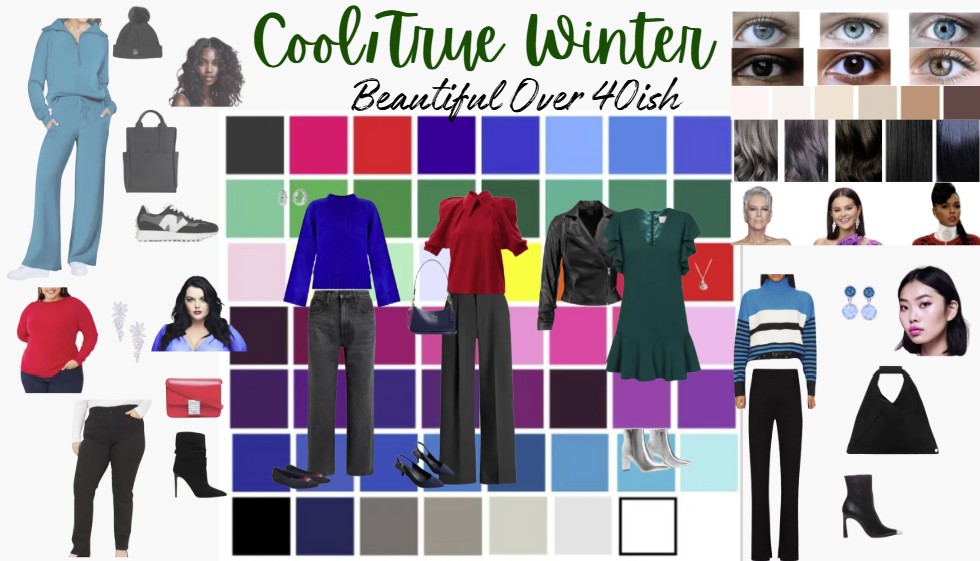
Think your outfits fall flat even when the fit is right? If white tees look harsh or cream looks dingy, color is the missing piece. Cool/True Winter is a purely cool season with high contrast and clear, saturated colors that stay crisp next to your features. Ready for the True Winter capsule? If you shine in these shades, your True Winter color palette could transform your style.
Here’s the quick win. Hold up pure white and cream, then silver and gold near your face. If white and silver look cleaner on you, you may be True Winter. For a deeper check, complete this step-by-step test: https://beautifulover40ish.com/seasonal-color-palette-step-by-step/
Why it matters: color does the heavy lifting. When you wear high-chroma, cool shades with strong light-dark contrast, your skin looks brighter, your eyes sharpen, and your outfits feel intentional. Let’s make getting dressed easier with a few smart color moves.

What Is Cool/True Winter? Understand Your Season and Why It Matters

Cool or True Winter thrives on clean, cool pigments and firm contrast, evoking a winter landscape of crisp, high-contrast aesthetics. Think bright whites, inky darks, and jewel tones that look crisp against your features. The primary color aspect here is cool chroma paired with undertone. When your colors match your undertone, your skin clears, your eyes sharpen, and outfits feel polished with less effort.
| Cool or True Winter | What it looks like | Best color traits | Go-to colors | Why it works on you |
|---|---|---|---|---|
| High-contrast, crisp, clean color harmony | Bright whites next to inky darks, sharp edges, clear color | Cool undertone plus cool, clean chroma, firm contrast | Optic white, true black, charcoal, navy, cobalt, emerald, blue-red, fuchsia, icy pink, icy blue, icy lavender | When shades match your cool undertone, your skin looks clearer, your eyes look sharper, and outfits feel polished with less effort |
The 12 color seasons explained in plain English (plus a simple cheat sheet)
Seasonal color analysis groups people by three dials: undertone, value, and chroma. Undertone is cool or warm. Value is light or dark. Chroma is clear or soft. Your best palette mirrors your natural mix of these traits.
- Winters: cool undertone, higher contrast, clear color.
- Summers: cool undertone, lower contrast, soft color.
- Springs: warm undertone, light to medium value, bright color.
- Autumns: warm undertone, medium to dark value, rich color.
| Family | Subseason | Undertone | Value feel | Chroma feel |
|---|---|---|---|---|
| Winter | Deep, Dark | Cool | Dark | Clear |
| Winter | True, Cool | Cool | Medium to dark | Clear |
| Winter | Bright, Clear | Cool-lean | Medium | Very clear |
| Summer | Light | Cool | Light | Soft |
| Summer | True, Cool | Cool | Medium-light | Soft |
| Summer | Soft, Muted | Cool-lean | Medium | Very soft |
| Spring | Light | Warm | Light | Bright |
| Spring | True, Warm | Warm | Light to medium | Bright |
| Spring | Bright, Clear | Warm-lean | Medium | Very bright |
| Autumn | Soft, Muted | Warm-lean | Medium | Soft |
| Autumn | True, Warm | Warm | Medium to dark | Rich |
| Autumn | Deep, Dark | Warm | Dark | Rich |
Cheat sheet you can use while shopping:
| Season | Best quick picks |
|---|---|
| Winter | Pure white, black, jewel tones, cool silver |
| Summer | Soft cool pastels, cool grays, muted berries |
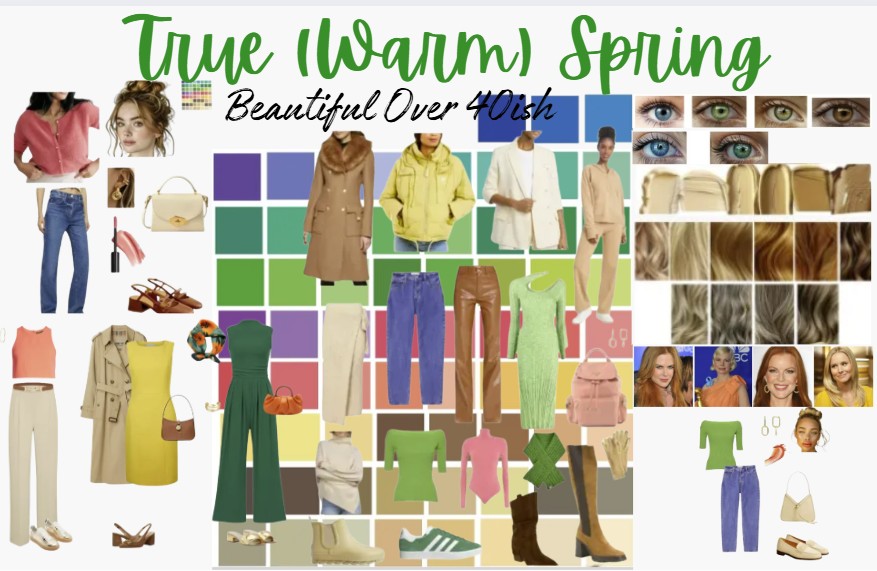
| Spring | Warm clear brights like coral, turquoise, cream |
| Autumn | Warm deep shades like camel, rust, olive |
Cool Winter and True Summer represent neighbor groups within their cool families, so testing helps distinguish them. If you suspect Cool Winter, watch how your face reacts to higher contrast and cold-toned color. The right hues make your features look more focused, not louder.
| What to test | Cool Winter (cool family, higher contrast) | True Summer (cool family, softer contrast) | What you should see on your face |
|---|---|---|---|
| Contrast level | Handles bold, high-contrast combos (black and white, ink navy with crisp white) | Looks best in low to medium contrast (soft navy with dove gray, charcoal with misty blue) | Right match makes features look focused and clear, not loud |
| Best “cold” neutrals | True black, optic white, cool charcoal, deep navy | Soft white, cool gray, pewter, soft navy | Good shades sharpen eyes and brows, skin looks even |
| Bright cool colors | Clear jewel tones (cobalt, icy pink, fuchsia, blue-red) | Muted cool tones (rose, berry, periwinkle, soft teal) | Winter reads crisp and clean, Summer reads smooth and calm |
| Saturation | Strong, clean color holds up near the face | Slightly grayed, powdery color sits better | If it’s too strong, you’ll notice color first, not your features |
| “Too much” sign | If too soft, you can look washed out or dull | If too bold, you can look harsh, shadowy, or blotchy | Wrong match adds noise (redness, under-eye shadows, uneven tone) |
| Quick fabric test | Try black vs charcoal, then cobalt vs dusty blue | Try charcoal vs black, then dusty blue vs cobalt | The right side looks more defined, the wrong side looks louder |


Cool/True Winter traits: skin, hair, and eyes checklist
Use this checklist to see if your features match True Winter patterns and color palette. It is not about stereotypes. It is about undertone and contrast working together.
- Skin: skin tone with cool undertones or neutral-cool undertone. Blue undertones are often visible. You may flush pink. Little to no golden tint in bare skin. Olive overtones can appear, but the undertone stays cool.

– Hair: hair color in ash brown to black, such as dark ash brown. Minimal warmth. Natural highlights can exist, but they read cool or neutral.

– Eyes: eye color in icy blue, gray, cool green, cool brown, near-black. Blue undertones often show here too. The whites look clear and bright next to the iris.

– Contrast: your best looks involve strong light-dark contrast. Black and white near the face look sharp, not harsh.
- Metal test: silver outperforms yellow gold. White gold is often fine, rose gold usually distracts.
Helpful note: a tan or self-tan can mislead. Judge by undertone and face contrast, not your current shade. Look at the color story of your features as a set.
| Trait | True Winter (Cool Winter) checklist |
|---|---|
| Goal | Match undertone plus contrast, not stereotypes |
| Skin undertone | Cool or neutral-cool undertone |
| Skin clues | Blue undertones often show, you may flush pink, little to no golden tint in bare skin |
| Olive note | Olive overtones can appear, but the undertone stays cool |
| Hair range | Ash brown to black (for example, dark ash brown) |
| Hair warmth | Minimal warmth, any natural highlights read cool or neutral |
| Eye colors | Icy blue, gray, cool green, cool brown, near-black |
| Eye clues | Blue undertones often show, whites look clear and bright next to the iris |
| Contrast | Strong light-dark contrast suits you best |
| Black and white test | Black and white near the face look sharp, not harsh |
| Metal test | Silver beats yellow gold, white gold often works, rose gold often distracts |
| Tan warning | Tan or self-tan can mislead, judge by undertone and face contrast, not your current shade |
| Final check | Look at the color story of your features as a set |
Quick color tests to verify Cool/True Winter
Test at home in indirect daylight, no makeup, with a plain top. Tie hair back. Hold each color near your face and watch the changes.
- Pure white vs cream: white should brighten your skin and eyes; cream often looks dull or sallow.
- Fuchsia vs coral: clear fuchsia wakes up your face; warm coral can turn ruddy.
- True red vs tomato red: blue-red feels refined; tomato red skews orange and fights the skin.
- Silver vs yellow gold: silver blends and lifts; yellow gold can sit on top of the skin.
- Charcoal vs warm brown: charcoal looks sleek; warm brown makes shadows look heavier.
What to watch for with the winning option:
- Skin looks clearer, less redness or blotch.
- Eyes look brighter, with a cleaner edge to the iris.
- Face shadows look smaller, especially under the eyes and around the nose.
Tip: take two photos per test item with the same light and settings. Compare side by side. Your eye notices patterns better in photos.
| Quick color test (indirect daylight, no makeup, plain top, hair tied back) | Better match for Cool/True Winter | If the warmer option wins instead |
|---|---|---|
| Pure white vs cream | Pure white brightens your skin and eyes | Cream can look dull or a bit sallow |
| Fuchsia vs coral | Clear fuchsia wakes up your face | Warm coral can make you look ruddy |
| True red (blue-red) vs tomato red | Blue-red looks clean and refined | Tomato red can pull orange and fight your skin |
| Silver vs yellow gold | Silver blends in and lifts your features | Yellow gold can sit on top of your skin |
| Charcoal vs warm brown | Charcoal looks sleek and crisp | Warm brown can make shadows look heavier |
| What to watch for with the winning option | Skin looks clearer, with less redness or blotch; eyes look brighter with a cleaner iris edge; face shadows look smaller (under-eyes, around the nose) | Skin looks uneven, eyes look muted, shadows look deeper or wider |
| Photo tip | Take two photos per test, same light and settings; compare side by side to spot patterns faster | Changing light or settings can hide the real effect |
Famous Cool/True Winters to use as a reference

Celebrities can help you spot visual patterns, even with styling variables. Look for cool hair tones, crisp whites, and jewel colors that do not shout on them.
- Anne Hathaway: thrives in black, white, and cherry red. High contrast makes her features pop.
- Krysten Ritter: cool black hair, porcelain skin, sharp pairing with cobalt and fuchsia.
- Lucy Liu: looks sleek in icy pastels, inky navy, and clear silver jewelry.
- Katie McGrath: striking in emerald, royal purple, and blue-red lipstick. Clean whites are stunning.
Key takeaways:
- Sharp contrast looks intentional, not severe.
- Cool hair tones anchor the palette.
- Jewel colors read elegant instead of loud.
Use these examples for pattern training, then trust your drape results over press photos.
| Celebrity (Cool/True Winter reference) | What stands out | Best colors and details to watch | Pattern to learn |
|---|---|---|---|
| Anne Hathaway | High contrast looks clean and polished | Black, crisp white, cherry red | Strong contrast makes features pop, not harsh |
| Krysten Ritter | Cool depth in hair and skin reads sharp | Cool black, cobalt, fuchsia | Bold jewel tones look crisp when undertones stay cool |
| Lucy Liu | Cool, clear colors look sleek on her | Icy pastels, inky navy, clear silver jewelry | Clear, cool shades stay refined, not muted |
| Katie McGrath | Saturated jewel tones look rich, not loud | Emerald, royal purple, blue-red lipstick, clean white | Cool jewel tones and bright white look intentional |
| Key takeaways (quick check) | Contrast, coolness, clarity | Sharp black and white, cool hair tones, jewel colors | Use these for pattern training, trust drapes over photos |
Bright Winter vs Bright Spring vs Light Summer: key differences at a glance
These neighbors are often confused with True Winter types. Here is how to separate them quickly.
| Comparison | Bright Winter | Bright Spring | Light Summer |
|---|---|---|---|
| Undertone | Cool | Warm | Cool |
| Best lights | Icy pastels, pure white | Cream, warm ivory | Misty pastels, cool light neutrals |
| Best brights | Clear jewel tones, neon-cool accents | Warm clear brights, warm reds | Gentle, softened brights |
| Neutrals | Black, charcoal, ink navy | Camel-light tan, warm navy | Cool gray, soft navy, stone |
| Metals | Silver, chrome | Yellow gold, warm gold | Silver, soft brushed silver |
| Black test | Works well | Looks heavy | Too strong |
| Overall feel | High contrast, cool clarity | Radiant warmth, sunny clarity | Light, cool, and soft-focused |
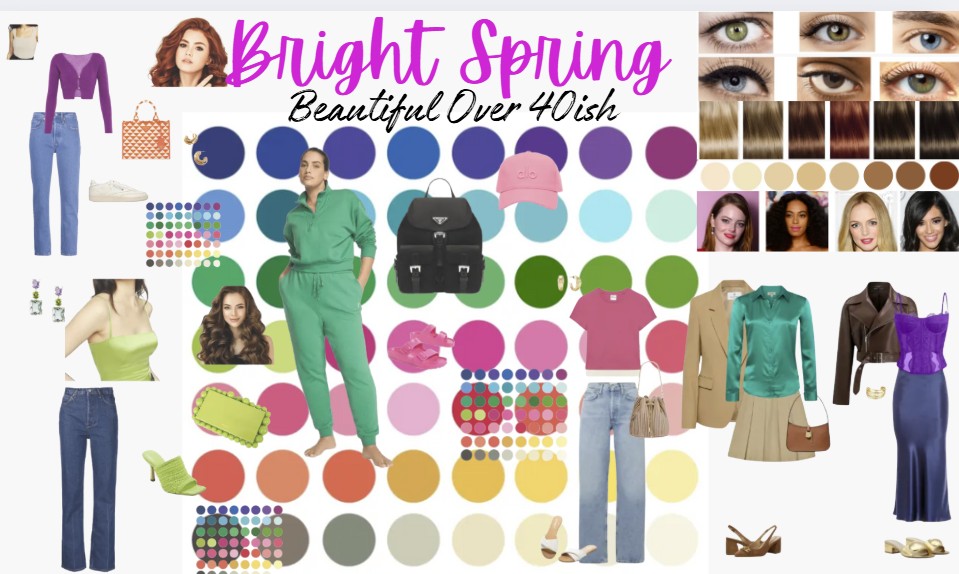
- Bright Winter vs Bright Spring: both are bright. Bright Winter is cool and handles black, icy pastels, cobalt, and silver. Bright Spring is warm, glows in cream, tomato red, coral, clear warm yellow, and usually looks weighed down by black.
- Bright Winter vs Light Summer: both are cool. Light Summer is lighter and softer with powdery finishes. Black overwhelms Light Summer. Winter needs higher contrast and cleaner, sharper color.
If these checks point to cool, high contrast, and clear pigments working best, you are likely in True Winter territory. Test with the at-home drapes, snap the photos, and compare with a calm eye. Your best palette should look like you, only sharper.
Cool/True Winter vs Warm Winter and Deep Autumn: Know the Difference
Sorting Winter from its lookalike neighbors can save you months of confusion. Cool or True Winter needs cool, bright, high-contrast color with no visible warmth. Dark Winter and Deep Autumn both carry warmth, so the wrong test colors can add shadows, redness, or a dull cast.
Use your face as the feedback loop. Watch for clear skin, brighter eyes, and even lip color. The right season makes everything look smoother without extra makeup.
| Feature | Cool/True Winter | Warm Winter (Dark Winter) | Deep Autumn |
|---|---|---|---|
| Undertone | Cool only, no warmth | Neutral-cool with a warm pull | Warm, golden, sometimes olive |
| Best overall effect | Bright, crisp, high-contrast | Deep, rich, slightly warmed | Deep, earthy, warmed |
| Worst-case in wrong colors | Looks sallow or tired in warm tones | Looks flat in icy brights | Looks gray or washed out in icy brights |
| Best whites | Pure white, icy white | Bright white or soft white (not creamy) | Cream, ivory |
| Best black | True black | Soft-black, inky navy | Espresso, deep brown (black can look harsh) |
| Metal test | Silver, white gold | Silver or mixed metals | Gold, bronze, copper |
| “Red” that works | Blue-red, cranberry, ruby | Deep berry, wine (not orange-red) | Brick, rust, tomato red |
| “Green” that works | Emerald, blue-green | Deep teal, pine | Olive, moss, forest with warmth |
| Makeup cue | Cool pink or berry lips look even | Deep berry looks balanced | Warm rose, terracotta looks natural |
| Face feedback when it’s right | Skin looks clear, eyes look bright, lips look even | Skin looks smoother, features stay defined | Skin looks warm and even, shadows soften |
| Face feedback when it’s wrong | Warm shades add redness or a yellow cast | Icy shades add shadows, warm shades add blotch | Cool brights add grayness, harsh contrast shows lines |
| Quick fabric test near the face | Icy fuchsia vs tomato red (icy wins) | Black vs pure white (black wins more) | Espresso vs true black (espresso wins) |
Cool/True Winter vs Bright Winter


Cool/True Winter vs True Summer

Cool/True Winter vs Deep Autumn telltale clues
Deep Autumn is warm and rich. Camel, rust, and olive look luxe and alive on them. Gold jewelry glows and feels integrated. On a Cool Winter, those same shades pull the face sallow and flat.
Quick checks that separate the two fast:
- Hold up camel and rust. If your skin goes yellow or tired, you are not Autumn.
- Try olive vs cool charcoal. If olive deepens shadows, move to Winter tests.
- Compare jewelry. Silver should look crisp on Cool Winter, while yellow gold lights up Deep Autumn.
Use contrast tests with neutrals and reds:
- Black vs dark brown near the eyes and teeth: on Cool Winter, black makes the whites look clean and bright. On Deep Autumn, black can feel stark; dark brown looks rich and balanced.
- True red vs brick red: Cool Winter takes blue-red that looks vivid and refined. Deep Autumn looks healthy in brick or rust red, while blue-red can read cold or loud.
| Test Item | Cool/True Winter reacts best to | Deep Autumn reacts best to |
|---|---|---|
| Classic neutral | Black, cool charcoal | Dark chocolate brown |
| Red family | Blue-red, cherry | Brick, rust, tomato-brown |
| Warm basics | Avoid camel and rust | Camel, rust, olive |
| Metals | Silver, platinum | Yellow gold, antique gold |
| Key tell | If camel near your face makes you reach for concealer, you likely sit in Winter | If camel looks rich and easy on you, you likely sit in Deep Autumn |
Cool/True Winter vs Dark Winter telltale clues
Dark Winter, a sister palette to True Winter, sits next door and can confuse a lot of people. It is still cool-leaning, yet it can take a touch of warmth and needs slightly softer contrast than True Winter.
Run these pairs one at a time:
- Cobalt vs teal: True Winter shines in cobalt. Teal may look a bit muddy or bring out redness. Dark Winter often handles teal well.
- Fuchsia vs warm magenta: True Winter loves cool fuchsia. Warm magenta can look bruised on True Winter faces. Dark Winter can wear the magenta without dullness.
- Bright white vs soft white: True Winter needs bright white. Soft white works on Dark Winter but grays out a Cool True Winter face.
What to watch:
- If warm magenta and soft white look fine, you may be Dark Winter.
- If those same colors add under-eye shadows or a beige haze, you likely fit Cool True Winter.
Keep contrast in mind:
- Cool Winter handles icy lights against inky darks with ease.
- Dark Winter often looks better when you ease the contrast a notch, like ink navy with soft white rather than stark black with pure white.
| Test | Cool/True Winter (Cool Winter) | Warm Winter (Dark Winter) | Telltale clue |
|---|---|---|---|
| Cobalt vs teal | Cobalt looks crisp and bright, teal can look muddy or pull redness | Teal often looks clear and wearable, cobalt can feel a bit sharp | Teal flatters you more than cobalt |
| Fuchsia vs warm magenta | Cool fuchsia looks fresh, warm magenta can look bruised or heavy | Warm magenta stays clear, fuchsia can look extra bright | Warm magenta stays clean, not dull |
| Bright white vs soft white | Bright white looks clean, soft white can add a gray cast | Soft white works better, bright white can look harsh | Soft white doesn’t gray you out |
| Contrast level | Handles icy lights with inky darks, high contrast looks natural | Looks best with slightly softened contrast | Ink navy plus soft white beats stark black plus bright white |
| Quick read | Warm magenta and soft white add shadows or a beige haze | Warm magenta and soft white look fine | If both look good, you’re likely Warm Winter |
If you look warm and muted, what that means
If warm browns, camel, or mustard wake up your face, you are likely in Autumn. If peach, cream, and clear coral look fresh, you may be Spring. If cool colors work yet need to be softer and a bit dustier, check Summer. These neighbor seasons act as sister palettes to Winter sub-seasons like True Winter.
Use this quick guide when your reactions point away from Winter:
- Autumn: rich, warm, earthy. Camel, rust, mustard, olive. Gold jewelry looks at home.
- Spring: warm, clear, and sunny. Peach, cream, warm turquoise. Yellow-gold jewelry glows.
- Summer: cool and gentle. Dusty roses, powder blues, soft grays. Silver looks soft and easy.
Cool Winter needs three traits at once: cool, bright, and high contrast. If a color feels like too much, it is usually too warm or too muted. Try the cooler, clearer version. For example, swap teal for cobalt, tomato for cherry, or warm ivory for bright white.
Example you can try today:
- Put on a neutral top and test a row of scarves or tees from cream to bright white to icy gray. If your face clears only once you hit bright white and icy gray, you are on the right track.
| What you see on you | Likely season | Color traits | Colors to try | Jewelry cue | If it feels like “too much” | Quick test today |
|---|---|---|---|---|---|---|
| Warm, muted tones make you look healthier and more even | Autumn | Rich, warm, earthy | Camel, rust, mustard, olive | Gold looks at home | If bright, icy, or high-contrast colors overpower you, they’re likely too cool or too clear | Wear a neutral top, then try scarves or tees from cream to bright white to icy gray |
| Warm, light, and clear shades make you look fresh and awake | Spring | Warm, clear, sunny | Peach, cream, clear coral, warm turquoise | Yellow-gold glows | If dusty or grayish shades dull you, they’re likely too muted | Same test, note if cream looks best and bright white looks harsh |
| Cool colors work, but only when they’re soft and dusty | Summer | Cool, gentle | Dusty rose, powder blue, soft gray | Silver looks soft and easy | If sharp, high-contrast shades feel harsh, they’re too bright | Same test, note if icy gray works and bright white feels too stark |
| You only look your best in cool, bright, high-contrast color | Cool Winter | Cool, bright, high contrast | Cobalt, cherry, bright white | Silver looks crisp | If a shade feels like too much, it’s usually too warm or too muted, switch to a cooler, clearer version (teal to cobalt, tomato to cherry, warm ivory to bright white) | If your face clears once you hit bright white and icy gray, you’re on track |
Before and after swatch tests at home
Fair tests require clean inputs. Small lighting shifts can change your verdict, so keep the process tight and repeatable. Pay attention to your skin tone and cool undertones here.
Set up your space:
- Morning light by a window with indirect light.
- Clean face, hair off the face, no tinted moisturizer.
- Neutral top, ideally mid-gray or cool white.
- Hold paper or fabric right under the chin and cheeks. Note how it affects your skin tone and cool undertones.
| Step | What to do (keep it the same every time) | Why it matters |
|---|---|---|
| Light | Use morning light by a window with indirect light | Small light shifts change how the shade reads |
| Skin | Start with a clean face, hair off your face, no tinted moisturizer | Product and hair shadows can skew the color |
| Clothing | Wear a neutral top, mid-gray or cool white | Bright colors can reflect onto your skin |
| Reference | Hold white paper or neutral fabric under your chin and cheeks | A steady backdrop makes “before and after” easier to judge |
Color Drape Tests
- True black
- Bright white
- Icy Blue
- Frosty Yellow (almost turning greenish but not quite, not a pastel!)
- Emerald green
- Turquoise
- Cherry Red
- Fuschia
- Royal blue
- Pomegranate
- Jet black
- Blackberry
- Magenta
- Bright Periwinkle
- Icy pinks

 Test one cool vs warm pair at a time:
- Pure white vs cream.
- Cobalt blue vs teal.
- Fuchsia vs warm magenta.
- True red vs brick red.
- True black vs dark brown.
Record and compare:
- Use your phone at the same angle and exposure. Lock focus and exposure if you can.
- Take two photos per pair, then view side by side.
- Pick the photo where you see:
- Smoother skin with fewer shadows.
- Brighter eyes with a clean iris edge.
- Less redness around the nose and chin.
Helpful tip: if a color looks pretty but your face looks tired, the color is wearing you. True Winter colors should make your face look more defined, not more made-up.
| Step | What to do | Colors to use | How to record on your phone | What to pick in the better photo | Quick rule |
|---|---|---|---|---|---|
| 1 | Start with strong True Winter drapes | True black, jet black, bright white, icy blue, frosty yellow (almost greenish, not pastel), emerald green, turquoise, cherry red, fuchsia, royal blue, pomegranate, blackberry, magenta, bright periwinkle, icy pinks | Keep the same angle and distance each time, use the same lighting, lock focus and exposure if you can | Skin looks smoother with fewer shadows, eyes look brighter with a clean iris edge, less redness around the nose and chin | If the color looks pretty but your face looks tired, the color is wearing you |
| 2 | Test one cool vs warm pair at a time | Pure white vs cream | Take two photos, one per color, without changing position or settings | Choose the photo where your features look cleaner and more defined | True Winter shades should define your face, not make it look more made-up |
| 3 | Test one cool vs warm pair at a time | Cobalt blue vs teal | Take two photos per pair, then view them side by side | Look for clearer skin tone and brighter eyes | Stay strict on one pair at a time so the result is obvious |
| 4 | Test one cool vs warm pair at a time | Fuchsia vs warm magenta | Match the frame and exposure in both shots | Pick the one that reduces redness and dull shadows | Warm-leaning shades often add sallowness on True Winter skin |
| 5 | Test one cool vs warm pair at a time | True red vs brick red | Keep the phone at the same angle, no zoom changes | Choose the photo with a cleaner jawline and less under-eye shadow | True Winter red should look crisp, not earthy |
| 6 | Test one cool vs warm pair at a time | True black vs dark brown | Shoot in the same spot, same light, same background | Pick the one where skin looks even and eyes look sharp | True black usually beats brown for True Winter |
Accent colors that pop without shouting, plus metal finishes
High-chroma pops look best in small, intentional hits against black, white, or navy. Think clean color blocks, not blended tones. Jewel tones like royal blue and emerald green define this color palette.
Smart ways to add punch:
- A fuchsia bag with a black coat.
- True red lip with a white tee and navy blazer.
- Cobalt blue pumps with charcoal trousers.
- Jewel tones such as emerald green and royal blue in accessories.
| Accent or Finish | Base Colors That Keep It Sharp | Best Placement | Quick Example |
|---|---|---|---|
| Fuchsia (high-chroma pop) | Black, white, navy | One statement accessory | Fuchsia bag with a black coat |
| True red (high-chroma pop) | White, navy | Lip color as the single focal point | True red lip with a white tee and navy blazer |
| Sapphire (high-chroma pop) | Charcoal, black, white | Shoes for a clean color block | Sapphire pumps with charcoal trousers |
| Gold metal finish | Black, white, navy | Small hardware, jewelry, belt buckle | Gold hoops with a navy blazer and white tee |
| Silver metal finish | Black, white, charcoal, navy | Watch, bag chain, minimal rings | Silver watch with charcoal trousers and a white tee |
| Gunmetal metal finish | Black, navy, charcoal | Sleek hardware, cuff, buckles | Gunmetal bag hardware with a black coat |
Best metals for True Winter:
- Silver jewelry, platinum and silver, white gold, rhodium, gunmetal. These reflect your cool undertone and keep the look sleek. Silver jewelry stays crisp near the face.
- Skip yellow gold and warm rose gold near the face. They can muddy your skin tone. If you love them, push to shoes or a belt buckle.
| True Winter metal guide | What to wear | Why it works | What to skip near your face | If you still want warm metals |
|---|---|---|---|---|
| Best metals | Silver, white gold, platinum, rhodium, gunmetal | These look cool, crisp, and clean against True Winter skin | Yellow gold, warm rose gold | Use them away from your face, like shoes, a belt buckle, or a bag hardware |
Gem accents that sync with your palette:
- Sapphire, ruby with a blue-red base, amethyst, diamond. They mirror your jewel-tone strength and look expensive even in simple settings.
- Cobalt blue gems for extra pop.
| Gem | Best match for jewel-tone palettes | Undertone cue | Why it looks expensive fast | Simple-setting tip |
|---|---|---|---|---|
| Sapphire | Deep blues, teals, emerald greens | Cool blue base | Reads rich and polished, even in small sizes | Try a clean solitaire, oval, or round in white metal |
| Ruby (blue-red base) | True reds, berries, wine tones | Blue-red (not orange-red) | Holds depth under most light, keeps a luxe look | Go for a simple bezel or 4-prong setting to keep it bold |
| Amethyst | Purples, plums, magentas | Cool violet | Gives strong color without needing extra detail | A single-stone pendant or studs look sharp and refined |
| Diamond | Any jewel-tone mix | Neutral, bright | Adds crisp sparkle that lifts saturated colors | Choose a classic round or princess cut, minimal prongs |
Prints, patterns, textures, and colors to avoid

Your best prints are high contrast with clean edges. Keep shapes defined and spacing clear so the pattern does not blur. High contrast suits your color palette perfectly.
Strong print choices:
- Black and white stripes that are crisp and evenly spaced.
- Houndstooth and sharp plaids with clear linework.
- Color-blocking in black, white, cobalt blue, and icy tones.
- Abstract prints that feel graphic, not watercolor or smudged.
Textures that support the palette:
- Favor smooth, sleek, glossy finishes. Think polished leather, satin, silk, fine-gauge knits, and compact wool.
- Keep denim dark, even, and unfaded for a cleaner read.
| Category | Go for | Avoid |
|---|---|---|
| Print contrast | High-contrast prints with clean edges | Low-contrast prints where shapes blend together |
| Shape + spacing | Defined shapes with clear spacing so nothing blurs | Busy, tight patterns that read muddy from a distance |
| Stripes | Crisp, evenly spaced black-and-white stripes | Soft, uneven, or fuzzy stripes |
| Plaids | Houndstooth and sharp plaids with clear linework | Blurry plaids or linework that looks smudged |
| Color-blocking | Black, white, cobalt, and icy tones | Color-blocking in muted or dusty tones that dull the contrast |
| Abstract prints | Graphic abstracts with a sharp, clean look | Watercolor-style, washed, or smeared abstracts |
| Fabric finish | Smooth, sleek, glossy finishes (polished leather, satin, silk) | Rough, matte, or overly textured finishes that dull the look |
| Knits + wool | Fine-gauge knits and compact wool | Chunky knits or loose weaves that look fuzzy |
| Denim | Dark, even, unfaded denim | Faded, distressed, or heavily washed denim |
Colors and effects to skip:

- Rustic or marled textures can blur your natural definition. If you love texture, choose tight ribbing, smooth velvet, or high-shine patent instead.
- Warm tones or muted colors that dull the face: camel, mustard, olive, beige, cream, tomato red, peach, and heathered browns. Avoid warm tones and muted colors entirely.
| What to skip | Why it’s not flattering | Try this instead |
|---|---|---|
| Camel | Can read warm and dusty, dulls the face | Crisp black, bright white, cool navy |
| Mustard | Adds a yellow cast, can make skin look tired | Clear lemon, cool gold accents only |
| Olive | Can mute contrast and flatten features | True emerald, blue-based teal |
| Beige | Can blend into skin and drain color | Cool taupe, stone gray |
| Cream | Can look sallow next to the face | Optic white, icy ivory |
| Tomato red | Too warm, can overpower natural tones | Blue-red, cherry, cranberry |
| Peach | Can add a washed-out or ruddy look | Cool pink, rose, berry |
| Heathered browns | Mixed warmth can muddy definition | Charcoal heather, cool cocoa |
| Rustic textures (tweed, homespun, rough knits) | Softens edges, blurs clean lines | Tight ribbing, smooth velvet, high-shine patent |
| Marled textures (multi-tone knit blends) | Breaks up color, reduces sharpness | Solid knits, smooth weaves, sleek finishes |
Can a True Winter wear Brown?

Fast filter while shopping:
- Ask, is the print high contrast and cool? Are the edges crisp? Do the colors look icy or jewel-like? If yes, you are likely in the right lane.
| Topic | Quick take for True Winter | Best brown choices | Browns to skip | Fast filter while shopping |
|---|---|---|---|---|
| Can a True Winter wear brown? | Yes, but it has to read cool, deep, and crisp, not soft or warm. | Espresso, cool dark chocolate, black-brown, deep cocoa with an ashy or cool cast. | Camel, tan, caramel, rust-brown, golden brown, warm taupe, anything that looks creamy or dusty. | Ask, is the print high contrast and cool? Are the edges crisp? Do the colors look icy or jewel-like? If yes, you are likely in the right lane. |
For a more thorough article on the Cool/True Winter palette, visit the following blog: Wear Jewel Tones: Cool (True) Winter Capsule Made Simple – Beautiful over 40ish

Wear Jewel Tones: Cool (True) Winter Capsule Made Simple
Wear Cool & Bright Colors: Clear (Bright) Winter Made Simple
Wear Rich Tones: Deep Dark Winter Capsule Made Simple
Warm and Muted Style, Your Soft Autumn Capsule Made Easy
Wear Warm, Rich & Toasty: Warm/True Autumn Capsule Made Simple
Wear Warm, Rich Tones: Deep Autumn Capsule Made Simple
Find Your Seasonal Palette at Home: Simple Steps & Results
Discover more from Beautiful over 40ish
Subscribe to get the latest posts sent to your email.